

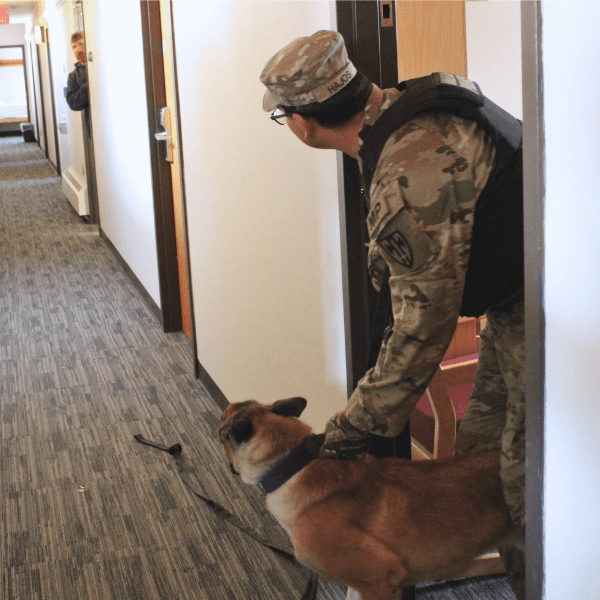
How Often Should You Train with Your Working Dog?
Why Consistency Matters More Than You Think
If you’re working a dog, you already know your K9 isn’t just another tool—it’s your partner. A living, breathing asset that can either help you succeed in the field or become a liability if not maintained properly. The question isn’t whether to train regularly, it’s how consistently you’re putting in the work.
Let’s get into why frequent, disciplined training—combined with clear documentation—is non-negotiable.
Why Consistency Is More Important Than Frequency Alone
Most agencies have a required number of training hours each month. That’s fine for policy, but if you’re just aiming to meet the bare minimum, you’re already behind.
The truth is, K9 skills don’t stay sharp on their own. Dogs, just like people, lose muscle memory and discipline without reinforcement. Detection, apprehension, tracking—it all fades without reps.
And it’s not just the dog. Handlers lose edge too. Your leash handling, command timing, and ability to read your dog’s body language all decline if you’re not consistently training under varied, realistic conditions.
What Happens When You Let It Slide
Inconsistent training leads to problems—simple as that.
-
Your dog may start breaking obedience commands, getting distracted in the field, or worse.
-
You may hesitate or misread a situation in the field, which can put everyone at risk.
-
Trust between you and your dog weakens without constant work together.
-
You open your agency—and yourself—to liability if something goes wrong during a deployment and there’s no consistent training record to show you’ve done the work.
This isn’t just about performance—this is about credibility and safety.
Build a Stronger Team Through Joint Agency Training
One of the best ways to avoid complacency is to get outside your own agency and train with others. Regional K9 groups, joint training days, and mutual aid scenarios offer opportunities to run your dog in new environments and around unfamiliar teams.
Here’s why that matters:
-
Different handlers will spot things you may miss from your end of the leash.
-
Exposure to other dogs and handlers adds pressure and builds control.
-
If you’re ever deployed in a mutual aid situation, knowing how other K9 teams work can prevent confusion when seconds matter.
No K9 team ever got better by training in a vacuum.
Why You Need to Document Every Training Session
Here’s the part handers like to ignore—but it’s just as important as the training itself. If you don’t document your training, you’re gambling.
- Documentation shows that you’re maintaining your dog’s skills and your own.
-
It helps you track performance over time and identify problem areas early.
-
It protects you in court. If your K9 is ever involved in a use-of-force incident or suppression hearing, your training logs will be the first thing attorneys look at.
-
It shows that you didn’t just “wing it.” You trained with intent and purpose.
Your records should include date, time, duration, location, weather, what you trained on, how the dog performed, and any issues or corrections you addressed. Make it habit, make it clean.
Bottom Line
This job doesn’t leave room for “good enough.” Your K9 is a reflection of you. You don’t get to cut corners and hope for the best. Frequent, consistent, and realistic training is how you stay sharp, stay safe, and stay ready.
Train with discipline. Train with purpose. Train like your life—and your partner’s—depends on it.
Because one day, it just might.
Share this article

Written by : Mia Simpson
Follow us
A quick overview of the topics covered in this article.

