

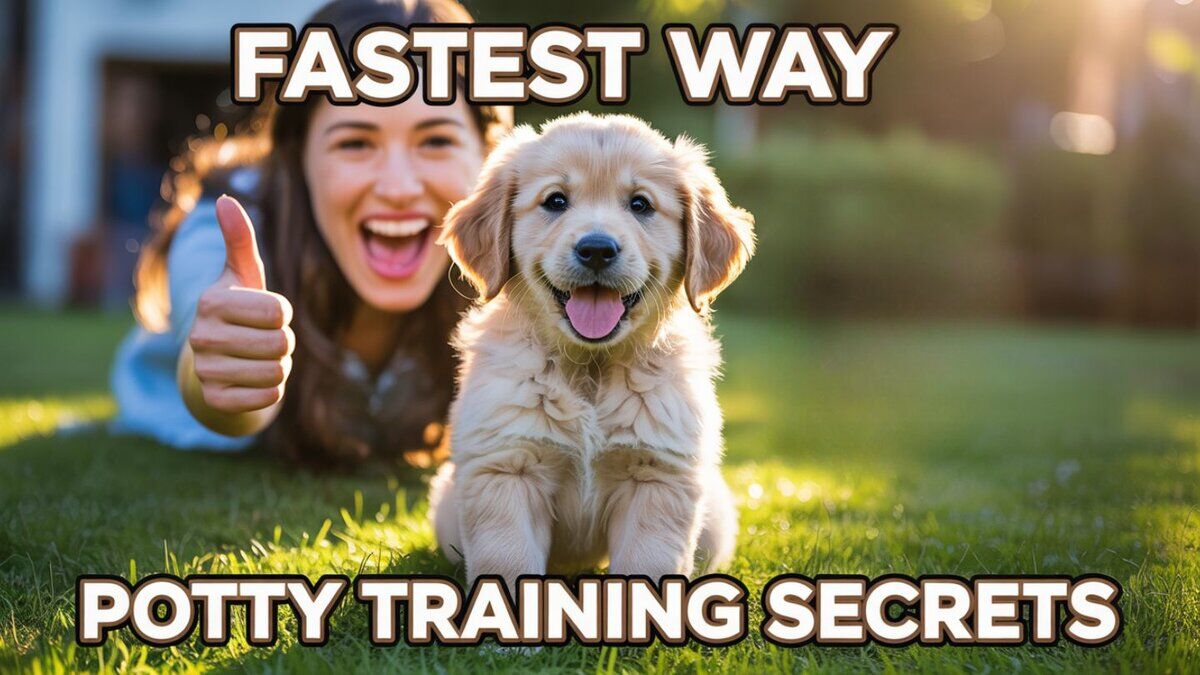
What Is the Fastest Way to Potty Train a Puppy?
Bringing home a new puppy is pure joy, but let’s be honest, those first few weeks of house training can feel like a never-ending cleanup marathon. If you’re wondering what the fastest way to potty train a puppy really looks like, you’re not alone. Every new dog owner wants to know the secret to fewer accidents, less stress, and a pup who understands where the bathroom actually is.
Here’s the good news: with the right approach, you can see major improvement in just a couple of weeks. The key is combining a structured schedule with smart supervision and plenty of positive reinforcement. Let’s walk through exactly how to make puppy potty training as fast and smooth as possible.
Key Takeaways
- The fastest potty training method combines constant supervision, a strict schedule, and immediate rewards for going in the right place
- Most puppies cannot be reliably potty trained in under 2–4 weeks, but you can dramatically cut accidents in the first 7–10 days with structure
- The quickest progress comes from crate training, taking your pup out every 1–2 hours, and rewarding within 2–3 seconds of finishing
- Pick one clear potty plan (outdoor only vs. pads then outside) and stick to it without changing surfaces every few days
- Calm, consistent responses to accidents and thorough odor removal are just as important as successful outdoor trips
How to Potty Train a Puppy Fast: The Core Strategy
Let’s set realistic expectations right from the start. When we talk about “fastest,” we really mean “most efficient and low-accident”, not some magical 3-day fix you might see promised online. Successful potty training takes consistent effort, but the payoff is huge for both you and your furry friend.
Here’s a simple, step-by-step framework that works:
- Choose a specific potty spot outdoors (or a designated indoor area if needed)
- Set an hourly schedule for potty breaks
- Use a crate or small confinement area when you can’t supervise
- Reward every correct potty with treats and praise for the first 30 days
For an 8–10 week old puppy, aiming for major progress in 2–3 weeks is realistic when you’re home and consistent. Most puppies can start showing good habits within this timeframe, though complete reliability often takes longer.
What slows training down more than anything else? Skipping supervision, allowing free roaming of the house, or responding inconsistently to accidents. A “fast but structured” plan in the first month almost always means fewer accidents long-term compared to a relaxed approach.
Step 1: Set Up Your Puppy’s Home Base
A controlled environment is the foundation of rapid potty training. Think of it as giving your new puppy clear boundaries so they can succeed.
Create a small puppy zone, this could be a laundry room, bathroom, or exercise pen, with these essentials:
| Item | Purpose |
| Bed or crate | Sleeping area and rest |
| Fresh water bowl | Hydration |
| Safe chew toys | Mental stimulation |
| Easy-clean flooring | Quick accident cleanup |
Free access to your whole house in week one dramatically increases accidents and confuses your pup about where the appropriate spot is. When a puppy can wander anywhere, they’ll naturally pick spots that seem convenient to them, and trust us, it won’t be the spot you’d choose.
The home base should have minimal distractions, but normal household activity in the background. This way, your puppy learns with real-life noise around them while still having clear boundaries.
Pro tip: Place the crate inside or directly next to this home base. This makes moving from rest to outside simple and fast, no long walks through the house where accidents can happen.
Step 2: Use Crate Training as Your Accelerator

Crate training is one of the most effective tools for speeding up house training when sized and used correctly. Dogs naturally avoid soiling their sleeping area, it’s an instinct left over from their wild ancestors who kept their dens clean.
Choosing the right crate size matters:
Your puppy’s crate should be just large enough for them to stand up, turn around, and lie down comfortably. Any bigger, and your pup might designate one corner as a bathroom and another as a sleeping area, which defeats the purpose entirely. Many crates come with dividers so you can adjust the space as your dog matures.
How to use the crate effectively:
- Use it for naps, nighttime sleep, and short unsupervised periods
- Never use it as punishment (we want the crate to feel like a comfortable, restful place, not a jail)
- For puppies 8–12 weeks old, limit crate time to their age in months (often even less at first)
- Always take your pup directly from the crate to the outdoor potty spot on a leash
That last point is crucial: every single time your puppy comes out of the crate, go straight outside to the same spot. This creates a powerful habit faster than almost any other technique.
Step 3: Build a Fast-Track Potty Schedule
A strict schedule is the single fastest way to cut down on accidents in the first 1–3 weeks. Puppies thrive on routine, and their little bladders are surprisingly predictable when you pay attention to timing.
Age-based guidelines for potty breaks:
| Puppy Age | Daytime Potty Frequency |
| 8–10 weeks | Every 60–90 minutes |
| 10–12 weeks | Every 90 minutes to 2 hours |
| 3–4 months | Every 2–3 hours |
| 5–6 months | Every 3–4 hours |
Beyond these intervals, take your pup out immediately after every meal, nap, and play session. Puppies pee and poop more frequently after eating, sleeping, and burning energy. Understanding timing is what makes the difference between constant accidents and steady progress. The question of how often you should take a puppy out to pee reinforces how age, bladder development, and daily routine directly impact success. When bathroom breaks are proactive instead of reactive, training speeds up dramatically.
A typical morning might look like this:
- 7:00 a.m. – Wake up and immediately go to the potty spot
- 7:15 a.m. – Breakfast (following your regular feeding schedule)
- 7:30 a.m. – Outside for potty break
- 7:45 a.m. – Short playtime indoors
- 8:15 a.m. – Back outside for another potty break
- 8:30 a.m. – Crate time for a morning nap
Use the same outdoor potty area every time. Walk your puppy on a leash straight to that spot before any play or sniffing elsewhere. Once they understand this is the bathroom, not the playground, training accelerates.
Pick a consistent cue phrase like “go potty” or “bathroom time.” Here’s the key timing that many owners miss: say your cue quietly as your puppy is actively eliminating, not before they start. After about a week of repetition several times daily, your pup will start associating the word with the action.
Step 4: Reward Perfect Timing (and Only Perfect Timing)
The fastest progress comes from immediate rewards after correct behavior, not after coming back inside. This is where many well-meaning owners accidentally slow things down. Potty cues work much like foundational obedience skills. The repetition principles behind teaching recall to your puppy mirror what happens with bathroom training, consistent wording, immediate reward timing, and gradual proofing across environments turn a behavior into a reliable response rather than a coincidence.
- The 2–3 second rule:
Treats or praise must happen within 2–3 seconds of your puppy finishing, while they’re still standing in the potty area. If you wait until you’re back inside, your pup thinks they’re being rewarded for walking to the door or entering the house, not for going potty outside.
- Tips for reward success:
- Use very small, high-value treats reserved only for outdoor potty success during the first few weeks
- Immediately reward with enthusiastic praise (“Good potty!”) plus the treat
- Keep treats in your pocket or by the door so you’re always ready
- Ignore “almost successes” (like starting outside but finishing inside), simply clean up and redirect calmly
For those near misses, avoid scolding. Just calmly redirect without fuss. Punishment creates confusion and can make your puppy hide when they need to go.
After 30–45 days of consistent success, you can gradually reduce treat frequency while keeping verbal praise and the occasional reward. By then, the habit is forming nicely.
Step 5: Supervision Rules That Prevent Accidents
Close supervision is one of the most overlooked “fast-track” tools because it lets you catch and redirect early signs before an accident happens. Paying attention to your pup’s body language makes all the difference.
- Watch for these pre-potty signals:
- Sudden sniffing in circles
- Pacing or wandering away from family
- Heading toward the door or a specific corner
- Squatting motion beginning
- Restlessness after a period of calm
A great technique is using a light house leash to keep your puppy within 4–6 feet when they’re awake and free in the house. This isn’t about restricting movement, it’s about spending time together while staying aware of their needs.
- When you’re busy, use confinement:
If you’re on phone calls, cooking, showering, or otherwise occupied, your pup should go into the crate or home base, not wander unsupervised. Even a few minutes of freedom can result in an accident that sets back training.
Consistent supervision in the first 2–3 weeks usually results in far fewer long-term challenges than cleaning up repeated accidents. It’s an investment that pays off quickly.
Step 6: Decide on Outdoor-Only vs. Puppy Pads (and Stick to It)
Changing your plan midstream can slow training, so the fastest path is choosing a long-term goal early and committing to it.
- Outdoor-only training pros:
- Generally clearer for the puppy to understand
- Faster in the long term if you’re home frequently
- No transitional step to phase out later
- Works well for most dogs in houses with yard access
- When puppy pads make sense:
- High-rise apartment living
- Very long workdays without midday help
- Extreme weather conditions
- Senior or mobility-limited owners
If you use pads, always place them in the same limited area, away from the sleeping area. Many owners set up pads in one corner of the home base.
- The hybrid challenge:
Teaching both pads and outdoor potty at once often extends training time. Puppies can become confused about acceptable surfaces, is it okay to pee on soft things indoors? Why can’t I use the rug?
If pads are temporary, plan the transition from the start. A common approach:
- Start with pads in a designated spot
- Gradually move pads closer to the door over 1–2 weeks
- Move pads just outside the door
- Transition to the grass or outdoor surface completely
For working dog owners or those with irregular schedules, having a clear plan prevents the puppy from developing preferences that are hard to break later.
Step 7: Handle Accidents Without Slowing Training
Accidents are inevitable, even with the best plan. How you respond determines how quickly your puppy learns the right habits.
- If you catch your puppy mid-accident:
- Interrupt calmly with a neutral sound (a quick “oops!”)
- Gently pick up your pup
- Carry them outside to the potty spot to finish
- Praise if they complete outside
- What NOT to do:
- Yelling or harsh corrections
- Rubbing their nose in urine (this doesn’t teach anything useful)
- Punishment after the fact (your puppy won’t connect it to the accident)
These reactions only confuse your pup and can make them hide when they need to go, which makes training much harder.
- Clean thoroughly to remove odor:
Use an enzymatic cleaner, specifically designed to break down urine odors. Regular household cleaners don’t fully eliminate the odor at a molecular level, and residual urine smells draw your puppy back to the same place.
After any accident, review your schedule: How long since the last potty break? When was the last meal? Was there a play session? Use this information to adjust timing and prevent accidents in the future. They should reflect and see what they can do better to set their puppy up for success.
If the dog continues having accidents inside, make sure to consult with a veterinarian to ensure there are no health issues. But if the dog is constantly having accidents inside it could be a UTI, stones, parasites, etc.
Realistic Timelines: How Fast Is “Fast” for Puppy Potty Training?
Every puppy is different, but understanding general timelines helps you set appropriate expectations and celebrate real progress. Early consistency matters more than perfection. The principle that puppy training should start before 16 weeks highlights how habits formed during the critical developmental window shape long-term behavior patterns. Establishing structure early doesn’t just speed up potty training, it builds clarity that carries into obedience and household manners.
Typical training milestones:
| Stage | Timeframe | What to Expect |
| Major improvement | 2–4 weeks | Significantly fewer accidents |
| Good consistency | 2–3 months | Rare accidents, signals often |
| Reliable training | 4–6 months | Very few accidents |
| Full bladder control | 6–12 months | Complete reliability |
The “age in months plus one hour” guideline helps estimate daytime bladder capacity. A 2-month-old puppy can hold it for about 3 hours maximum; a 4-month-old for about 5 hours. This is the maximum capacity, not a target, aim for more frequent bathroom breaks than the limit.
- Nighttime is different:
Most puppies can sleep longer stretches at night, but plan on at least one middle-of-the-night potty trip for very young puppies (under 12 weeks). As your pup grows, these nighttime interruptions decrease.
- When to see your vet:
If you notice persistent accidents despite consistent training, very frequent urination, straining, blood in urine, or ongoing digestive issues, schedule a vet visit. Medical issues like UTIs can slow progress and need professional attention.
Common Fast-Track Mistakes That Actually Slow Potty Training
Many owners unintentionally sabotage quick progress with a few repeated habits. Recognizing these pitfalls helps you avoid them. For owners balancing busy schedules, structured accountability can help prevent common training setbacks. Formats similar to online puppy class virtual training emphasize step-by-step routines, timing discipline, and consistent follow-through, factors that significantly reduce confusion during house training.
Mistakes to watch for:
| Mistake | Why It Slows Training |
| Full house freedom in week 1 | Too many accident opportunities |
| Inconsistent feeding times | Unpredictable potty needs |
| Playing before potty outside | Puppy forgets why they’re out |
| Rushing back inside after success | Puppy delays to extend outdoor time |
| Frequent food changes | Digestive upset, unpredictable stools |
| Easily distracted supervision | Missing pre-potty signals |
- Quality food matters:
Premium dog food with fewer fillers produces smaller, less frequent stools. This makes potty timing more predictable and shortens training compared to cheap foods with lots of corn, soy, or by-products.
- Keep a potty log:
A simple 7–10 day log tracking times, locations, and accidents helps you spot patterns and adjust your plan quickly. Note when your puppy tends to have accidents and when they succeed, you’ll often discover helpful insights.
Turning Potty Training Into Lasting Success
The fastest way to potty train a puppy isn’t about shortcuts, it’s about consistency, supervision, and clear communication. A structured schedule, immediate rewards for success, and preventing accidents before they happen will always outperform guesswork. When expectations are consistent and routines are predictable, puppies learn quickly and confidently. Patience during the early weeks builds habits that last a lifetime, turning a stressful stage into a foundation for dependable house manners and overall obedience.
At Custom Canine Unlimited, we help owners move beyond basic house training with professional structure and proven systems. Whether you prefer hands-on coaching through one-on-one dog training in Gainesville, GA, Columbus, or across Florida, we provide solutions tailored to your goals. For added flexibility, our online puppy class options through online k9 courses offer structured guidance you can apply at home. We also specialize in advanced programs such as law enforcement K9 training for working dogs that require dependable performance. Let us help you create reliable habits from day one and build the structure your puppy needs for long-term success.
Frequently Asked Questions
Can any puppy really be potty trained in seven days?
While a few puppies in ideal situations may appear mostly trained in about a week, most need several weeks for real reliability. In seven days, you can often reduce indoor accidents dramatically with strict scheduling and supervision, but setbacks are still likely, and that’s a normal part of the process.
What is the fastest way to potty train a puppy if I work full-time?
Owners who are away 8–10 hours will generally see slower results unless they arrange daytime help. Consider having a trusted neighbor, family member, or professional dog walker visit for mid-day potty breaks during the first months. If no daytime help is available, combine a small, puppy-proofed area with pads (or even a litter box designed for dogs) and a crate.
Is it faster to potty train a puppy inside first and then move outside?
Training indoors first with pads or indoor grass can be convenient, but it often takes longer overall if your goal is outdoor-only potty habits. Puppies can develop strong preferences for indoor surfaces, which you’ll then need to undo when shifting to grass or soil. The fastest long-term route to outdoor-only habits is usually starting outside from day one when practical. When indoor options are necessary, plan from the start how and when you’ll transition to teach your new puppy the ultimate goal.
Why does my puppy keep peeing in the same indoor spot?
Lingering urine odors, even after basic cleanup, attract your pup back to the same area repeatedly. Regular household cleaners often leave behind traces that your puppy can still detect. Use a high-quality enzymatic cleaner following label directions for dwell time. Temporarily block access to that spot with furniture, a gate, or a pen while reinforcing outdoor potty breaks for several weeks.
Share this article

Written by : AJ Vargas
AJ Vargas is a highly skilled Canine Trainer at Custom Canine Unlimited, bringing extensive hands-on experience in law enforcement, working dogs, and specialized K9 operations. With a deep commitment to public safety and canine performance optimization, AJ has trained and deployed working dogs in high-stakes environments, supporting law enforcement agencies and security teams across the country. His expertise spans obedience, detection, patrol work, and real-world deployment readiness, ensuring both dogs and handlers achieve operational excellence. At Custom Canine Unlimited, AJ continues to advance canine training standards, helping shape top-tier K9 teams that deliver measurable results in the field.
Follow us
A quick overview of the topics covered in this article.

