

Understanding Fear-Based Reactivity vs True Aggression in Dogs
Dog owners, trainers, and canine professionals often face a critical challenge: accurately distinguishing fear-based reactivity from true aggression in dogs. These two behavioral patterns require fundamentally different training approaches, and misidentification can escalate dangerous situations or damage the relationship between owner and dog. Whether you’re a pet owner, dog trainer, shelter professional, or canine enthusiast, understanding the underlying motivation behind your dog’s behavior is essential for effective training and safety.
This blog provides dog owners and trainers with the knowledge to identify these behavioral differences, assess situations more accurately, and implement appropriate training strategies. You’ll learn specific body language indicators, common triggers in everyday situations, and when professional evaluation becomes essential.
Key Takeaways
- Fear-based reactivity is defensive behavior aimed at creating distance from a perceived threat, while true aggression involves intent to control, dominate, or cause harm.
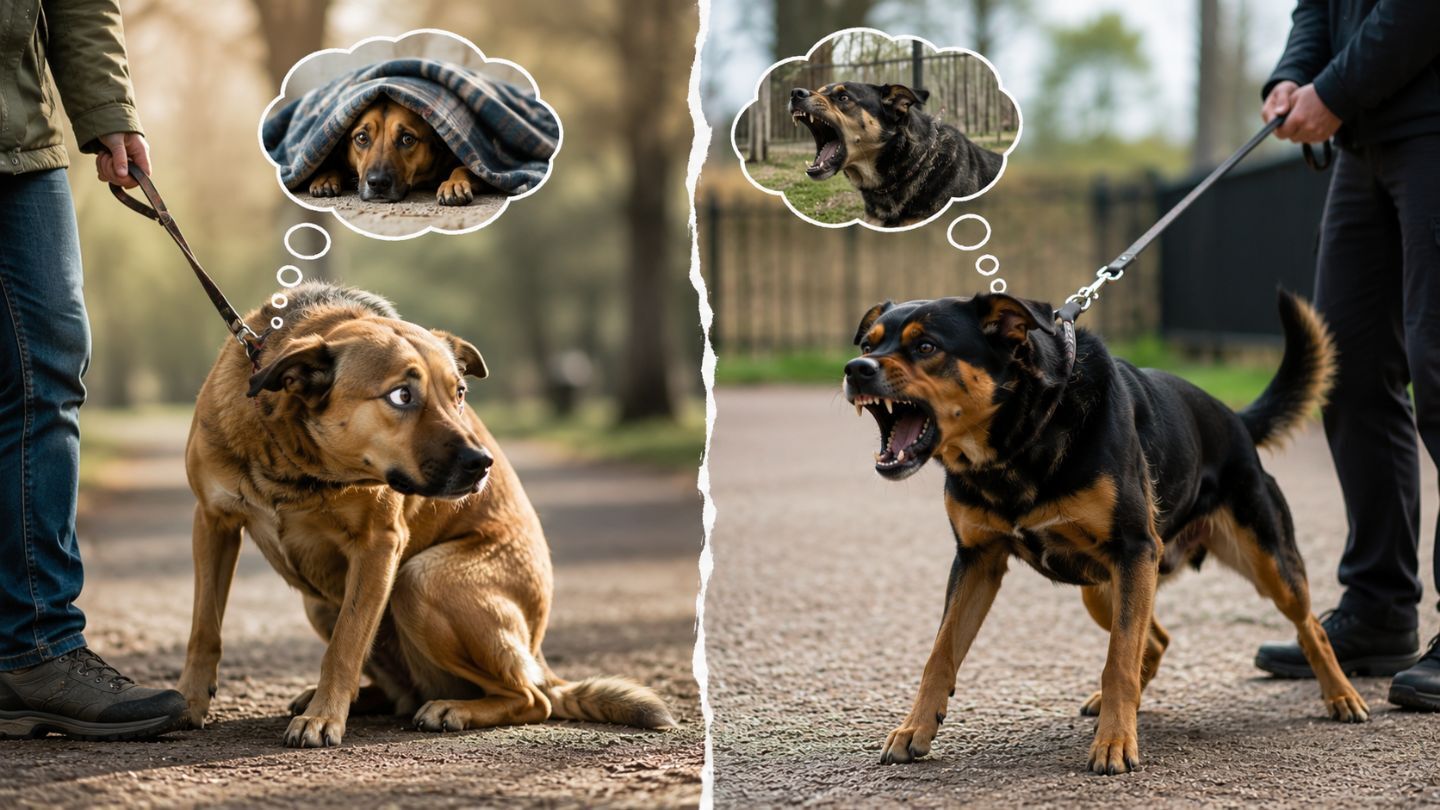
- Body language and behavioral cues reveal whether a dog is acting from fear or true aggression. Fearful dogs display submissive postures while aggressive dogs show confident, forward-leaning stances.
- Proper identification determines the correct training approach: confidence-building for reactive dogs versus structured control protocols for truly aggressive dogs.
- Professional evaluation is essential for dogs displaying either behavior pattern, especially when safety concerns arise.
- Early intervention prevents escalation from reactivity to aggressive behavior, protecting both caregiver and dog.
Defining Fear-Based Reactivity and True Aggression in Dogs
Fear-based reactivity occurs when a dog reacts defensively to a perceived threat, often displaying nervous body language, growling, or retreating. The underlying motivation is distance-seeking; the dog wants to escape or avoid harm. Reactive dogs often display excessive arousal in response to normal stimuli, such as barking, lunging, or cowering, which are behaviors out of proportion to the situation. This emotional response stems from uncertainty, past traumatic experiences, inadequate socialization during puppyhood, or sudden environmental changes that overwhelm the dog.
True aggression is fundamentally different. This is an intentional, calculated action to cause harm or assert dominance, characterized by focused behaviors and often sustained attacks. Truly aggressive dogs aren’t trying to escape; they’re attempting to control space, resources, or assert authority. The distinction between these behaviors is critical: aggression in dogs can be offensive or defensive, but true aggression carries proactive intent rather than reactive fear.
These behaviors can appear in many different contexts, from family homes and dog parks to veterinary clinics and training classes. Dogs may display reactive or aggressive behaviors in a variety of situations, including walks, veterinary visits, dog parks, training classes, or encounters with unfamiliar people and animals.
Common Misconceptions About Dog Behavior

Many owners misinterpret barking and lunging as dog aggression when it’s actually leash reactivity, a form of fear-based behavior where restraint prevents escape, intensifying defensive responses. This frequent misidentification leads trainers to apply correction-based methods that increase fear rather than resolve it.
Another common error involves labeling fearful dogs as “bad dogs” or assuming reactive behavior indicates permanent temperament flaws. Behavior is contextual and modifiable. A dog displaying excessive barking or acting aggressively in one environment may perform excellently under different conditions.
Environmental factors such as busy households, crowded public spaces, frequent routine changes, or stressful experiences can lower a dog’s behavioral threshold and contribute to reactive or aggressive responses. Changes in routine, moving homes, household stress, crowded environments, and lack of exercise or enrichment, all lower a dog’s threshold. People may observe what appears to be aggressive behavior when the underlying motivation is fear amplified by cumulative stress.
Reading Canine Body Language: Fear vs Aggression Indicators
A fearful dog may exhibit body language such as flattened ears, a low tail position, and avoidance behaviors, while an aggressive dog typically displays more confident body language, such as a forward stance and raised hackles. Recognizing these patterns in real-time is essential for family’s safety.
Signs of fear-based reactivity include:
- Lowered body posture with weight shifted rearward
- Ears pinned back or flattened against the head
- Tail tucked or held low
- “Whale eye” with visible sclera, avoiding eye contact
- Lip licking, stress yawning, trembling
- Attempts to retreat or create distance
- High-pitched barking or whining when cornered
- Freezing followed by an explosive reaction if escape is blocked
True aggression indicators include:
- Forward lean with confident, stiff posture
- Weight shifted forward, chest broad
- Raised hackles (piloerection) along the spine
- Ears forward or erect
- Tail high, possibly wagging but rigid
- Fixed, intense direct eye contact
- Deep growling, snarling, and teeth baring
- Purposeful approach toward the target
- Blocking movement or closing distance
Behavioral signs can help differentiate fear-based reactivity from aggression; fearful dogs may exhibit submissive behaviors like cowering and avoiding eye contact, while aggressive dogs display more assertive behaviors such as growling and lunging with forward momentum. The direction of movement tells you the motivation: fear seeks to increase distance while aggression seeks to close it.
Vocalizations provide additional context. Fear produces higher-pitched sounds, whining, anxious barking, while offensive behaviors generate deeper growls and sustained aggressive barking. Watch for defensive aggression that can escalate from fear-based reactivity if a dog feels cornered, potentially leading to serious safety concerns.
Behavioral Assessment Techniques for Dog Owners and Trainers
Effective real-time assessment requires systematic observation and safety awareness. Use threshold testing by bringing triggers progressively closer until warning signs begin, documenting the earliest indicators. Note body posture changes, shifting thresholds under stress or fatigue, and the dog’s attempts to escape versus approach.
Step-by-step field assessment:
- Identify the trigger that initiated the dog’s behavior
- Observe body posture, is the weight forward or back?
- Check ear and tail position for fear versus confidence indicators
- Note eye contact patterns, avoidance suggests fear; fixed stare suggests aggression
- Assess movement direction, retreating or advancing?
- Listen to vocalizations for pitch and intensity
- Watch for escalation patterns as trigger distance changes
Safety protocols during assessment require proper equipment, including muzzles, secure leashes, and protective gear. When managing aggressive behavior, it is important to use protective gear like leashes and muzzles to ensure safety during training and exposure to triggers. Always ensure escape routes exist for the dog; blocking retreat can force defensive aggression. If a dog has a history of biting or severe aggression, work with a qualified professional and use appropriate safety measures.
Triggers and Environmental Factors
Understanding common triggers helps owners anticipate and manage both reactive behavior and true aggression. The underlying reasons for behavioral responses often trace to specific environmental factors.
Common fear-based reactivity triggers include:
- Unfamiliar environments with unpredictable stimuli
- Loud noises, including thunderstorms, fireworks, alarms, construction sounds, and traffic noise
- Unfamiliar sights, sounds, or smells
- Restraint or confinement preventing escape
- Owner’s stress is transmitted through the owner’s leash tension and body language
- Sudden movements or unexpected approaches
- Common stimuli presented at overwhelming intensity
Fear-based reactivity can stem from past traumatic experiences, inadequate socialization during puppyhood, or sudden environmental changes that overwhelm the dog. Dogs that lack emotional self-control may become frustrated when their excitement to greet another dog or person is thwarted by a leash or barrier, leading to reactive behavior.
True aggression triggers include:
- Resource guarding of food, toys, treats, or resting areas
- Territorial aggression when space is invaded
- Resource guarding of valued items, food, toys, or resting spaces
- Protective behavior around family members or the home
- Confrontation from other dogs or provocative human behavior
- Access restriction to valued resources
Stressful environments can intensify both types of behaviors. Crowded areas, chaotic surroundings, inconsistent routines, and overwhelming situations can lower a dog’s tolerance and increase emotional arousal.
Fear is a common motivator for reactive dogs, but other underlying emotions such as frustration or excitement can also contribute to reactivity. Aggression in dogs is often driven by fear, with dogs attempting to increase distance from perceived threats, which can escalate if their initial warnings are ignored.
Training Approaches: Reactive vs Aggressive Dogs
The correct training method depends entirely on accurate identification of the underlying motivation. Using aggression-focused techniques on fearful dogs worsens the problem; treating truly aggressive dogs as merely reactive creates safety risks.
For dogs displaying fear-based reactivity, confidence-building techniques include:
Building confidence in fearful dogs includes avoiding flooding, where a dog is forced into a stressful situation, and using positive reinforcement techniques. Counter-conditioning involves pairing the presence of a trigger with positive stimuli to change the dog’s emotional response from fear to anticipation of a reward. Remove the trigger as soon as it disappears to teach the dog that the scary thing yields great rewards.
Behavior modification programs for fear-based reactivity often include desensitization techniques, where the dog is gradually exposed to triggers to build tolerance. This systematic approach keeps the dog below threshold while creating positive associations with previously fear-inducing stimuli. Provide a predictable structure by maintaining consistent feeding, walking, and sleeping schedules to reduce environmental anxiety, which is a valuable principle in dog training for beginners, as consistency helps build confidence and clearer behavioral expectations.
Incorporate confidence-building activities, enrichment exercises, and controlled exposure to triggers while keeping the dog below its emotional threshold. Focus on rewarding calm, desirable behavior and building positive associations with previously stressful situations.
For truly aggressive dogs, structured control protocols include:
- Clear leadership and consistent rules
- Resource control with the trainer managing access
- Obedience training under progressively higher arousal
- Immediate redirection of aggressive signals
- Reward for restraint, compliance, and calm behavior
- Controlled training exercises that help the dog build self-control and confidence
Positive reinforcement training methods are effective in reducing fear-based reactivity and building a dog’s confidence. However, truly aggressive dogs may also require clear boundary communication. A certified trainer or board-certified veterinary behaviorist can design a treatment plan that addresses territorial aggression, protective aggression, or resource guarding appropriately.
Consult professional help if a dog lunges, snaps, or causes safety concerns to design a customized behavior modification plan, such as a structured reactive dog training program.
Safety Protocols During Training
Working with reactive dogs or aggressive dogs requires comprehensive protective measures, whether you’re training at home or using specialized services like aggressive dog boarding:
- Use muzzles during desensitization work with dogs showing biting potential
- Maintain secure leash control with backup trainers available
- Create a safe space where dogs can retreat during training sessions
- Work in enclosed areas that prevent escape while allowing distance management
- Use barriers and distance management tools
- Train caregivers in emergency response procedures
Creating a safe environment for dogs, free from potential triggers, is crucial for preventing behavioral issues related to fear and aggression. Equipment should allow control without escalating fear; head halters and front-clip harnesses provide redirection without confrontation.
Professional Intervention and Caregivers Support
Professional evaluation becomes essential when behavior modification attempts plateau, when safety concerns escalate, or when distinguishing fear-based reactivity from true aggression proves difficult. A veterinary behaviorist can rule out health issues, pain, or medical conditions that lower thresholds and contribute to aggressive behavior.
Reactive dogs can become aggressive depending on the situation and their past experiences, as reactivity puts them in a heightened emotional state that may lead to instinctive behaviors like fight or flight. Early intervention prevents this escalation pathway. Dogs repeatedly exposed to threats they cannot escape may stop avoidance behaviors and begin proactive aggression.
Experienced trainers diagnose complex behavioral issues by assessing mixed motivations, a dog may have underlying fear combined with resource guarding or frustration. Owners of highly reactive pets often benefit from comprehensive reactive dog management and training that addresses these overlapping drivers. Dogs with complex behavioral challenges often benefit from professional evaluation and a customized training plan that addresses their specific triggers, emotional responses, and lifestyle needs.
Early socialization of puppies, exposing them to various environments and stimuli, is one of the most effective strategies to prevent fear-based reactivity and aggression later in life. Early socialization and positive exposure to a variety of people, environments, sounds, and experiences can significantly reduce the risk of fear-based reactivity and aggression later in life.
Building Trust Through the Right Training Approach
Understanding the difference between fear-based reactivity and true aggression helps owners make informed decisions about training and behavior management. With patience, consistency, and appropriate guidance, many dogs can learn healthier coping skills, build confidence, and develop more positive interactions with people and other animals. Early intervention and individualized training remain the keys to long-term success.
Custom Canine Unlimited specializes in reactive dog training in Gainesville, helping dogs build confidence through structured and professional training methods. Our kennel master training, one-on-one dog training, law enforcement k9 training, and board and train programs in Gainesville are designed to support dogs with different behavioral needs. Let us help your dog achieve better obedience, stability, and long-term behavioral success with expert training solutions.
Frequently Asked Questions
Can fear-based reactivity develop into true aggression in dogs?
Yes, it can. Fear-based reactivity occurs when a dog feels threatened and reacts to create distance from the trigger. If a dog repeatedly experiences situations where escape is not possible or warning signals are ignored, it may learn that more intense behaviors such as snapping, lunging, or biting are effective. Over time, these defensive responses can escalate into aggressive behavior. Early intervention, positive training methods, and proper behavior modification can help prevent this progression and improve a dog’s confidence and coping skills.
How do I safely handle a dog showing aggressive behavior during training?
Safety should always be the top priority. Avoid confronting, cornering, or physically punishing a dog displaying aggressive behavior, as this can increase stress and escalate the situation. Use appropriate management tools such as secure leashes, barriers, or muzzles when recommended by a professional. Maintain a safe distance from triggers, watch for early warning signs, and end the training session if the dog becomes overly aroused. Working with a qualified trainer or veterinary behaviorist can help ensure a safe and effective training plan.
What are the warning signs that a reactive dog needs professional intervention?
Seek professional evaluation when reactive behavior intensifies despite consistent training, when the dog shows biting or sustained attacks, when triggers generalize to multiple situations, or when family’s safety becomes a concern. A board-certified veterinary behaviorist can rule out medical contributors and design a customized treatment plan.
Can dogs with fear-based reactivity still live normal lives?
Yes. Many reactive dogs successfully participate in family activities, training classes, dog sports, and public outings when their behavior is properly managed through training, environmental adjustments, and confidence-building exercises.
How long does behavioral modification typically take for reactive versus aggressive dogs?
The timeline varies depending on the dog’s history, temperament, environment, and the consistency of training. Dogs with fear-based reactivity often begin showing noticeable improvement within a few weeks of structured training, with significant progress occurring over several months. Dogs exhibiting aggressive behavior may require a longer-term behavior modification plan and ongoing management. Successful outcomes depend on realistic expectations, consistency, and addressing the underlying emotional or behavioral causes rather than simply suppressing symptoms.
What role does genetics play in fear-based reactivity and aggression?
Genetics can influence a dog’s temperament, sensitivity to stress, confidence levels, and overall behavioral tendencies. Some dogs may be naturally more cautious, reactive, or assertive due to inherited traits. However, genetics are only one part of the equation. Early socialization, training, life experiences, environment, and owner interactions all play significant roles in shaping behavior. Even dogs with a genetic predisposition toward fearfulness or reactivity can develop into well-adjusted companions when provided with positive experiences, appropriate training, and consistent support.
Share this article

Written by : AJ Vargas
AJ Vargas is a highly skilled Canine Trainer at Custom Canine Unlimited, bringing extensive hands-on experience in law enforcement, working dogs, and specialized K9 operations. With a deep commitment to public safety and canine performance optimization, AJ has trained and deployed working dogs in high-stakes environments, supporting law enforcement agencies and security teams across the country. His expertise spans obedience, detection, patrol work, and real-world deployment readiness, ensuring both dogs and handlers achieve operational excellence. At Custom Canine Unlimited, AJ continues to advance canine training standards, helping shape top-tier K9 teams that deliver measurable results in the field.
Follow us
A quick overview of the topics covered in this article.

