

Challenges of K9 Tracking | Custom Canine Unlimited
Navigating the Challenges of K9 Tracking: Elevation and Beyond
Tracking with a K9 is a partnership that can solve complex problems and locate missing persons with impressive precision. However, this intense teamwork doesn’t come without its set of challenges. K9 handlers and trainers often face numerous obstacles that can complicate the tracking process, with elevation changes being one of the most significant hurdles.
1. Elevation Changes
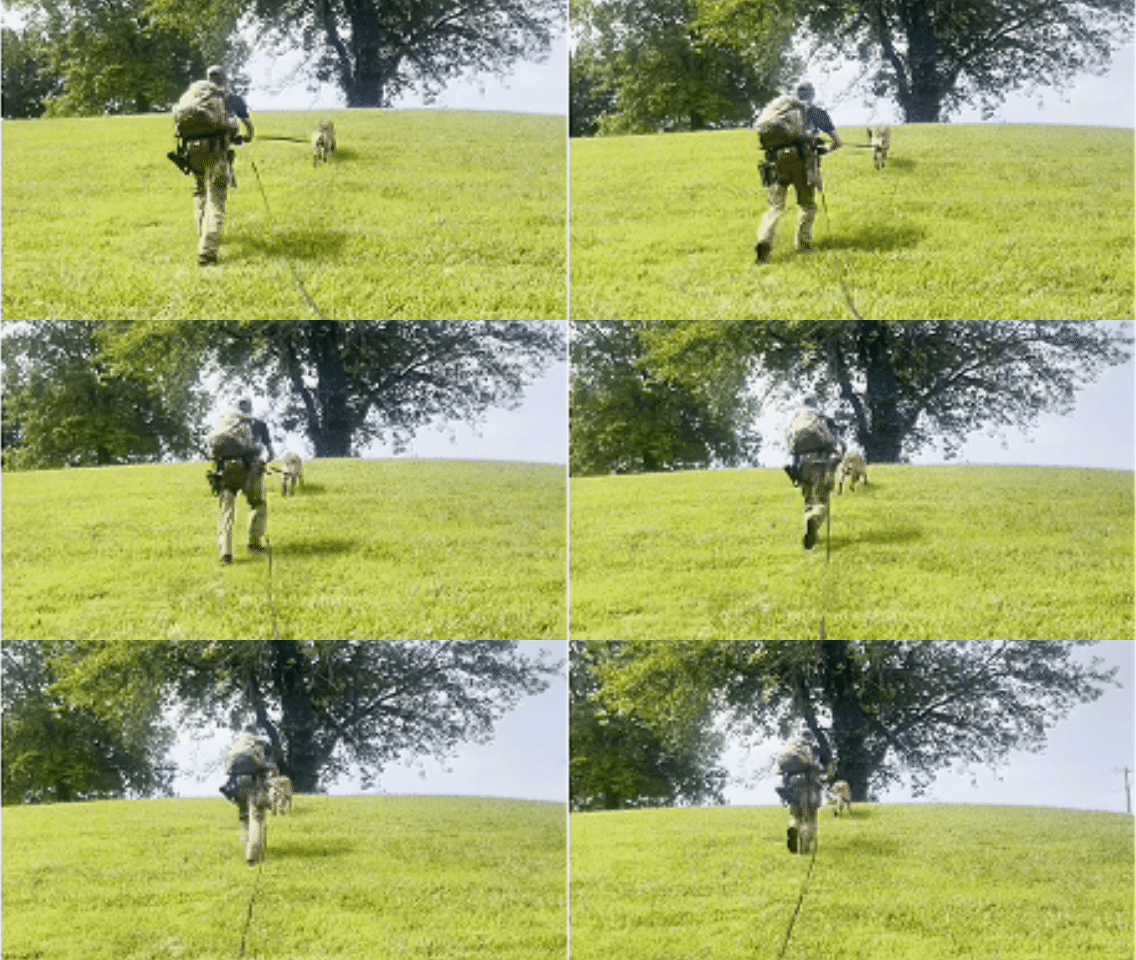
Elevation changes, whether ascending steep hills or descending rugged valleys, can dramatically affect a K9’s tracking performance. The primary challenge is that varying terrain can alter the scent distribution.
– Scent Dispersion: As scent travels, it can be influenced by wind, temperature, and humidity. On steep inclines or declines, the scent may disperse differently than on flat ground, making it harder for the K9 to follow a consistent trail.
– Physical Strain: Steep or uneven terrain requires more physical effort from the K9, which can lead to fatigue. A tired dog may have difficulty maintaining focus and energy, affecting tracking efficiency. Handlers must be vigilant about the dog’s physical condition and adjust their approach accordingly.
– Terrain Navigation: Dogs trained to track might find it challenging to navigate rough, elevated terrain. They may become hesitant or struggle to move through dense vegetation or rocky areas. Handlers need to carefully guide their K9 through such obstacles and work through any issues.
2. Environmental Conditions
The environment plays a crucial role in tracking, and K9s are highly sensitive to changes in their surroundings. Factors such as temperature, humidity, and weather can alter how scents are carried and perceived.
– Temperature Extremes: In hot conditions, scent can rise and disperse more quickly, while cold weather might cause scent to linger longer but become less volatile. Both scenarios can affect a K9’s ability to pick up and follow a trail accurately.
– Rain and Snow: Precipitation can significantly impact tracking. Rain can wash away scent trails or create muddied conditions that make tracking difficult, while snow can cover trails or alter scent distribution, adding another layer of complexity.
3. Distractions and Cross-Tracks
In both urban and natural environments, distractions can divert a K9’s attention from the target scent.
– Cross-Tracks: In areas with heavy foot traffic or multiple animal trails, a K9 may encounter competing scents. Cross-tracks can confuse the dog and make it challenging to stay on the correct trail. Handlers must help their K9 differentiate between the target scent and other confusing signals.
– Odor Contamination: Urban environments can present a different set of distractions. The presence of numerous smells, from exhaust fumes to food odors, can interfere with the K9’s ability to focus on the specific scent they are tracking.
4. Handler Experience and Communication
The handler’s role is pivotal in overcoming tracking challenges. Effective communication and understanding between the handler and the K9 are essential for successful tracking.
– Training and Experience: Experienced handlers are better equipped to interpret their K9’s signals and adjust their strategies as needed. They must be adept at reading the dog’s body language, recognizing signs of fatigue or frustration, and making tactical decisions based on the evolving situation.
– Teamwork: Successful tracking relies on seamless teamwork. Handlers must be able to guide their K9 effectively through challenging terrain, ensuring that their dog remains focused and motivated despite the difficulties they encounter.
Strategies for Overcoming Challenges
1. Training for Terrain: Incorporating diverse terrains into training routines can help K9s and handlers become accustomed to various conditions, including elevation changes. This prepares the team for real-world scenarios where such challenges are present.
2. Monitoring and Adapting: Handlers should continuously monitor their K9’s physical and emotional state, adapting their approach as needed. This includes recognizing when to take breaks, adjust the route, or provide additional support.
3. Environmental Familiarity: Understanding the environmental factors at play and how they impact scent can help handlers make informed decisions. Being aware of weather forecasts and terrain conditions can aid in planning and preparation.
4. Effective Communication: Establishing a strong bond and clear communication with the K9 enhances teamwork and tracking effectiveness. Consistent training and reinforcement help maintain this connection.
In conclusion, tracking with a K9 presents a range of challenges, with elevation changes being a significant factor that affects scent dispersion and physical exertion. By acknowledging these challenges and employing strategies to address them, K9 handlers and trainers can enhance their effectiveness and ensure a more successful tracking experience. Whether navigating steep hills or managing complex scent trails, the partnership between human and dog remains at the heart of successful tracking operations.
Share this article

Written by : Mia Simpson
Follow us
A quick overview of the topics covered in this article.

