

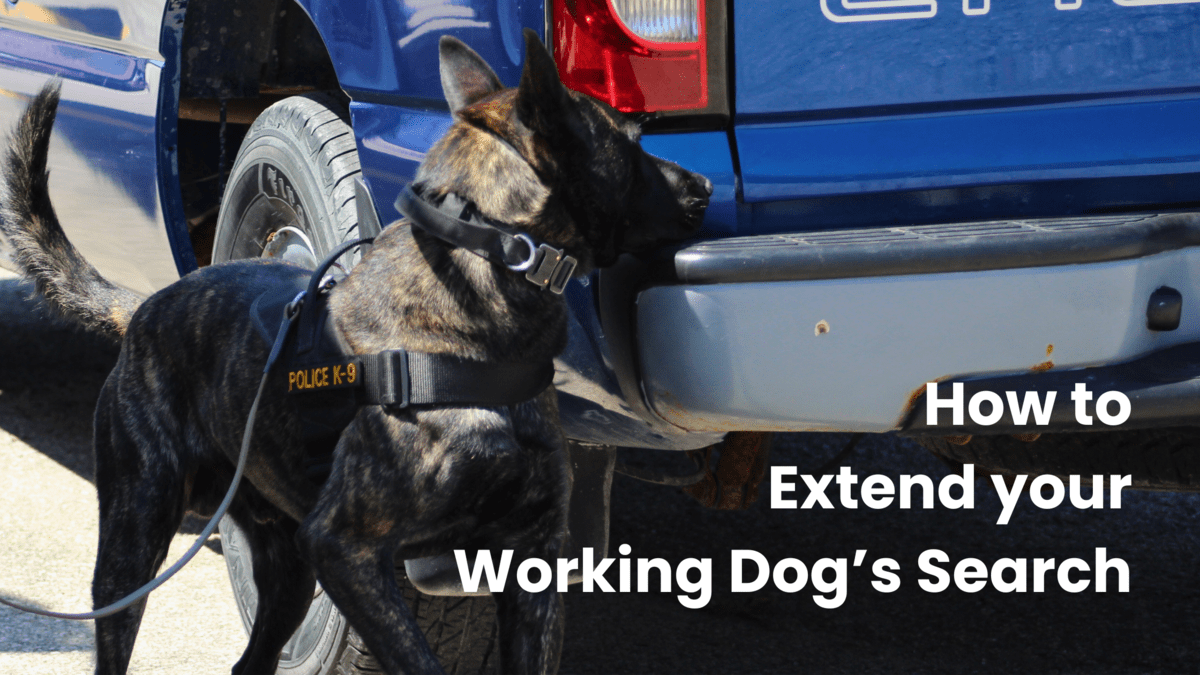
Extending Your Working Dog’s Search: Techniques for K9 Units and Handlers
Working dogs, whether in Police K9 units or MWD Teams, are indispensable assets in the detection of explosives and narcotics. These highly trained canines can locate hidden threats and substances that might otherwise go undetected. However, extending your working dog’s search capabilities requires thoughtful training and techniques to ensure they perform at their best over longer durations and varied environments.
In this guide, we’ll explore effective strategies to enhance your working dog’s search endurance, coverage, and reliability.
Incremental Distance Increases
Building Endurance and Coverage
Extending your working dog’s search range begins with gradually increasing the distance of training searches. Start with shorter distances and incrementally extend them as the dog becomes more comfortable and proficient. This method helps build the dog’s stamina and increases their ability to cover larger areas without losing focus.
Tips:
- Begin with familiar environments before progressing to more challenging locations.
- Use markers or flags to aid you in visually tracking the distance increments during training.
Varied Search Environments
Ensuring Versatility and Adaptability
A versatile working dog must be adaptable to various environments. Training should include indoor and outdoor scenarios, as well as searches around vehicles and other structures. This variety helps the dog become comfortable with different settings and surfaces, ensuring they remain effective in any situation.
Tips:
- Rotate training locations regularly to expose the dog to new challenges.
- Include environmental distractions to simulate real-world conditions.
Positive and Negative Reinforcement
Motivating Continuous Search Efforts
Motivation is key to maintaining a working dog’s enthusiasm during searches. Implement positive reinforcement when the dog successfully identifies a target. You may also consider the use of negative reinforcement at times through your training session.
Tips:
- Balance the use of positive and negative reinforcement depending on what your K9 responds to.
- Be consistent with rewards to ensure the dog understands the desired behavior.
Regular Breaks and Hydration
Maintaining Physical Stamina
Long search sessions can be taxing on a working dog. Regular breaks and hydration are crucial for maintaining their physical stamina and preventing burnout. Ensure the dog has access to water and rest periods, especially in hot or strenuous conditions. You can learn more about CCU’s 10/15 Rule on epsiode one of our SOURCE Short Set.
Tips:
- Schedule breaks based on the dog’s activity level and environmental conditions.
- Use shaded areas during breaks to help regulate the dog’s temperature.
Refreshing Training with New Scents and Patterns
Preventing Complacency
Dogs, like humans, can become complacent with routine. Regularly updating and refreshing training with new scents and search patterns keeps the dog engaged and sharp. Introducing novel elements prevents the dog from becoming too accustomed to specific routines, enhancing their overall effectiveness.
Tips:
- Rotate different scents and hide locations during training sessions.
- Incorporate unexpected variables to challenge the dog and maintain their interest.
Strong Foundation in Basic Obedience
Ensuring Focus and Responsiveness
A strong foundation in basic obedience is essential for a working dog to perform consistently during searches. Commands such as sit, stay, and recall need to be second nature to the dog, allowing handlers to direct and control their search efforts effectively.
Tips:
- Regularly practice obedience drills to reinforce commands.
- Use obedience exercises as part of the warm-up routine before search training.
Overcoming Common Challenges
Fatigue and Endurance
Building endurance through incremental training distances and regular breaks can help overcome fatigue. Monitoring the dog’s physical condition is crucial to ensure they remain healthy and capable.
Focus and Motivation
Maintaining focus in challenging environments requires a combination of varied training scenarios and reinforcement techniques. Keeping the dog engaged and motivated will result in more effective searches. Wondering how to keep your dog engaged through training? Utilizing higher praise, including their toy or a high-pitched praise voice, can aid you in reengaging your dog once he seems to have lost interest.
Preventing False Alerts
Regularly updating training with fresh scents and patterns helps prevent false alerts. Consistent reinforcement ensures the dog remains accurate in their detections.
Balancing Thoroughness with Speed
Efficiency in real-world scenarios is achieved through practice and experience. Training should simulate the speed and thoroughness required in actual operations, preparing the dog for the demands of fieldwork.
Conclusion
Extending your working dog’s search capabilities involves a combination of strategic training, reinforcement, and care. By implementing these techniques, handlers can ensure their dogs perform at peak levels, providing invaluable support in detecting explosives and narcotics.
Remember, the success of a K9 unit relies on the partnership between handler and dog. Building trust, understanding, and proficiency through dedicated training will enhance your dog’s abilities and ensure they remain an asset to your team.
For more advanced training techniques and expert insights, consider signing up for our specialized workshops and training sessions. Together, we can elevate the standards of K9 search operations and enhance public safety.
Stay safe and train smart!
Share this article

Written by : Mia Simpson
Follow us
A quick overview of the topics covered in this article.

