

How Do Detection Dogs Smell Drugs?
How Do Detection Dogs Smell Drugs?
Detection dogs have become an essential tool in various fields, including law enforcement, air transportation, and border security. These highly trained K9s are exceptionally skilled in detecting the presence of narcotics, explosives, and other dangerous chemicals. While their ability to sniff out these substances is impressive, many people wonder how detection dogs smell drugs. In this blog post, we’ll discuss the theory behind the ways dogs identify drug odor, from the science of olfaction to the training techniques used to develop their highly specialized skills.
The sense of smell is crucial to dogs, with research suggesting that scent-related brain regions in dogs are 40 times larger than those in humans. A dog’s nose is designed for smelling, with millions of olfactory receptor cells that can detect even the smallest scent molecules. When a detection dog smells a narcotic, their brain receives a specific scent signature from the odor molecules. This unique scent gets stored in the dog’s memory for future recognition purposes. With proper training, detection dogs can identify the same odor across various substances and environments.
To develop detection dogs’ specialized skills, they undergo extensive training, including odor recognition and discrimination. Initially, trainers teach the dog to associate target substances with a positive reinforcement (such as a toy). To accomplish this, the dog is allowed to sniff and interact with a target substance while receiving a reward for doing so. The dog learns to recognize the unique odor of the substance and associates it with rewards. Gradually, the dog is introduced to various odor profiles and taught to differentiate between them.
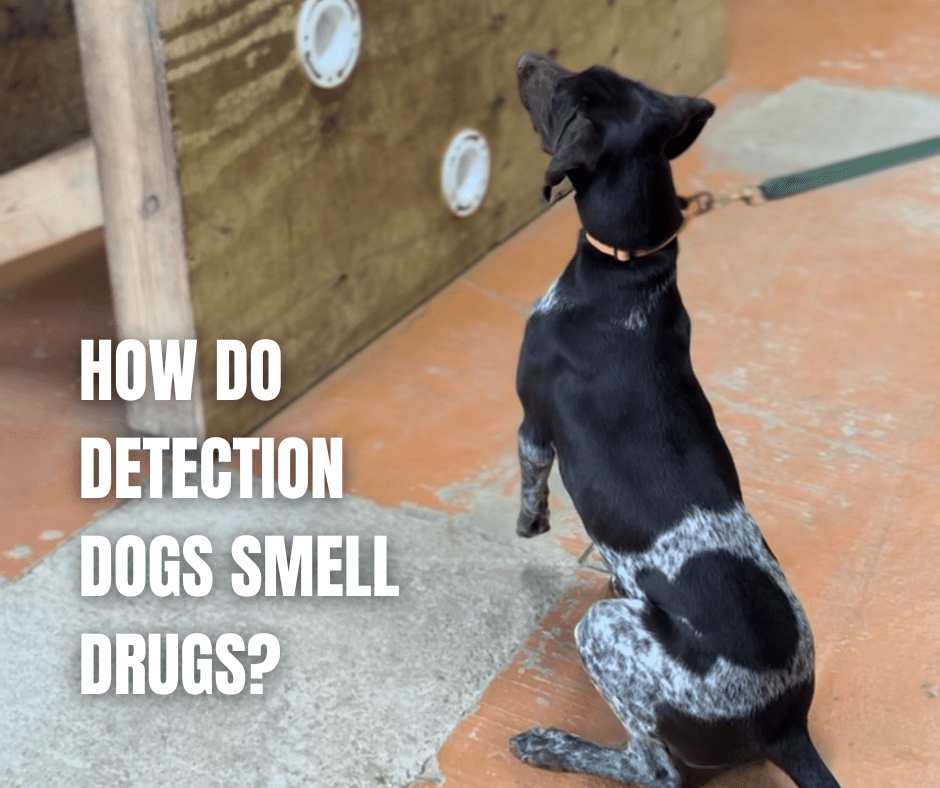
Detection dogs are also trained to identify the source of an odor. For example, when a drug is hidden in a suitcase, the dog is trained to indicate the precise location of the odor source. To do this, trainers start by introducing the dog to a scented object placed in various locations. The dog receives a reward when they locate the scent source. Through this process, the dog learns to follow odor trails and locate the precise location of the source.
The training process is not only essential for developing the dog’s specialized skills, but it also helps to ensure their safety. Often, detection dogs come into contact with dangerous substances such as fentanyl, cocaine, and heroin. Extensive training helps to keep these highly skilled K9s safe while still accomplishing their tasks.:
Detection dogs’ ability to smell drugs and other substances is exceptional, thanks to their highly specialized sense of smell and extensive training. From learning to recognize odor profiles to locating scent sources, these dogs are incredibly skilled and play a critical role in various operations, including law enforcement and airport security. As we continue to explore and understand their abilities, detection dogs will continue to be at the forefront of ensuring our safety and security.
Share this article

Written by : Mia Simpson
Follow us
A quick overview of the topics covered in this article.

