

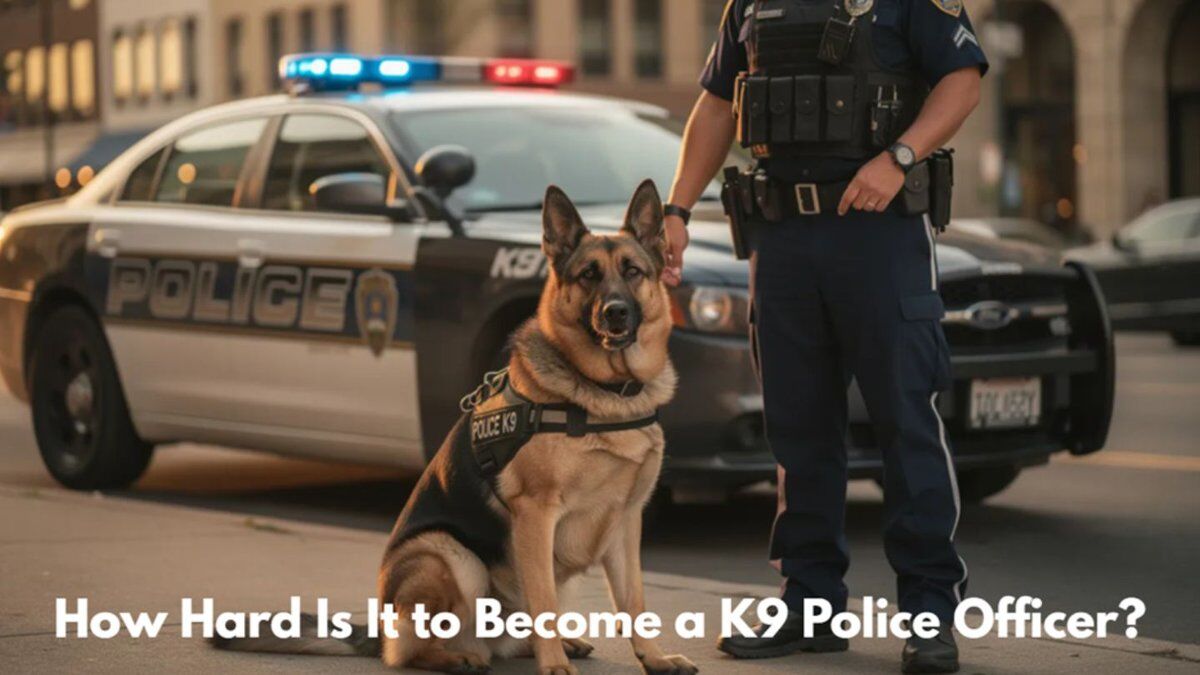
How Hard Is It to Become a K9 Police Officer?
Becoming a K9 police officer is a goal that attracts many law enforcement professionals, but the path to achieving it is far more demanding than most people realize. From years of patrol experience to competitive selection and intensive training, the journey requires commitment, physical readiness, and long-term dedication. In this blog, we break down how hard it really is to become a K9 police officer, what the role involves, how long the process takes, and whether this specialized law enforcement career is the right fit for you.
Key Takeaways
- It’s a long road: Expect 3–7 years from your first day at the police academy to potentially earning a K9 team slot, depending on department size and how often positions open up.
- Competition is fierce: Most departments operate with only 1–3 K9 teams, meaning you’ll compete against other highly motivated patrol officers for rare openings.
- The lifestyle is demanding: K9 officers work irregular hours, respond to high-risk calls, and care for their canine partner 24/7, including feeding, grooming, and housing the dog at home.
- Physical fitness matters throughout your career: From academy entrance to K9 selection and beyond, you’ll need to meet and maintain rigorous physical standards.
What Makes Becoming a K9 Officer So Challenging?
When we talk about how “hard” it is to become a K-9 officer, we’re really measuring four things: time investment, competition intensity, training demands, and lifestyle impact. Each of these factors stacks on top of the others, creating a path that only the most dedicated law enforcement officers complete.
First, here’s the reality check: most agencies require you to become a regular police officer first, then compete internally for rare K9 team openings. You can’t simply apply for a K9 role straight out of college or even directly from the police academy. This means you’re looking at years of patrol work before you even get a chance to apply.
At this stage, it’s also important to understand the difference between K9 handlers and K9 trainers. While handlers work operationally alongside their dogs in real-world deployments, trainers focus on developing canine skills and maintaining training standards, often without responding to calls for service.
K9 selection combines several critical factors:
| Selection Factor | What Panels Look For |
|---|---|
| Law enforcement skills | Strong arrest records, solid report writing, clean disciplinary history |
| Physical fitness | Passing current fitness tests, endurance for tracking, and pursuit |
| Temperament | Calm under pressure, ability to work independently |
| Dog handling potential | Comfort around highly trained police dogs, willingness to learn canine behavior |
Candidates must also juggle normal patrol duties with extra ride-alongs, training days, and studying K9 tactics, often on their own time. It’s essentially taking on a second job while still working your first one.
Here’s something many aspiring K-9 officers don’t initially consider: those long, irregular shifts and intense physical demands mean officers need strong long-term fitness and weight management strategies.
What Do K9 Officers Actually Do?
K9 handlers aren’t “just dog handlers”, they’re fully sworn law enforcement officers who happen to have an incredibly specialized skill set and a canine partner. Understanding what it truly means to be a K9 handler helps set realistic expectations about responsibility, training intensity, and daily workload.
Here’s what a typical K9 team might handle:
- Tracking suspects: Following odor trails to locate criminal suspects who’ve fled crime scenes
- Locating missing persons: Conducting search and rescue missions for children, elderly individuals, or people in distress
- Drug detection: Using the dog’s extraordinary sense of smell to detect drugs and illegal substances
- Explosives detection: Screening buildings, vehicles, and packages for bomb detection
- Building searches: Clearing structures where armed suspects may be hiding
- Evidence recovery: Finding discarded weapons, clothing, or other items connected to crimes
Beyond operational work, handlers are fully responsible for their patrol dogs around the clock. This means daily feeding, regular grooming, regular exercise, and at-home housing, often until the dog retires at around age 8–10. The dog essentially becomes part of the handler’s family, living with them rather than being kenneled at the department.
The emotional and time commitment is significant. Handlers often train or exercise their trained dogs on days off to keep skills sharp, which dramatically increases overall job difficulty. And many law enforcement agencies also use K9 teams for school demos, community events, and public demonstrations, adding even more schedule demands.
How Long Does It Take to Become a K9 Officer?
From your first police academy application to a potential K9 assignment, you’re typically looking at 3–7 years in the U.S. That’s not a typo, this is a marathon, not a sprint.
Here’s a realistic timeline breakdown:
| Stage | Typical Duration |
|---|---|
| Application, hiring, and police academy training | 6–12 months |
| Patrol experience requirement | 1–5 years (most departments require 1–3 years minimum) |
| K9 handler school (once selected) | 3–6 months |
| Total estimated time | 3–7+ years |
When officers begin researching where to enroll in a K9 handler program, they often discover that selection is highly competitive and usually limited to sworn law enforcement personnel sponsored by their department.
Minimum Requirements Before You Can Even Compete for K9
Before you can even think about joining a K9 team, you need to meet the baseline requirements to become a patrol officer. While exact standards vary by state and local jurisdiction, most agencies follow similar criteria.
Prerequisites to become a regular police officer:
- S. citizenship
- Minimum age of 21
- High school diploma or GED (though many departments prefer an associate or bachelor’s degree in criminal justice or related fields)
- Valid driver’s license
- Clean criminal record
Typical screening steps you’ll face:
- Comprehensive background investigation
- Polygraph examination (in many jurisdictions)
- Drug testing
- Medical examination
- Psychological evaluation
- Physical fitness tests (commonly including a 1.5-mile run, push-ups, sit-ups, and other endurance measures)
Once you’re on the police force, most departments expect at least 1–3 years of solid patrol experience before accepting K9 applications. Some agencies require up to 5 years. During this time, you need to maintain an excellent performance record, becoming known as a good patrol officer whom supervisors trust.
Strong physical conditioning and weight management are critical throughout this journey. Many agencies conduct periodic fitness or duty-readiness checks that can impact your eligibility for specialized K9 team assignments.
The Step-by-Step Path to a K9 Unit
Let’s map out the journey from aspiring officer to K9 handler in clear, chronological steps.
- Step 1 – Become a police officer: Complete required education (at minimum a high school diploma, though a bachelor’s degree helps significantly), pass written exams and physical fitness tests, and attend a state or local police academy. Academy programs typically run 12–24 weeks and cover firearms training, patrol procedures, criminal law, emergency response, and basic training fundamentals. You’ll need to pass every phase to graduate.
- Step 2 – Gain patrol experience: Spend 1–5 years as a patrol officer learning the core job responsibilities, report writing, traffic stops, arrest procedures, courtroom testimony, and crisis response. This is your time to build a reputation as dependable, safe, and professional. Other officers and supervisors need to trust you before recommending you for specialized training.
- Step 3 – Immerse yourself in K9 work: Request ride-alongs with current K9 teams. Volunteer to help at public demonstrations and community engagement events. Observe dog training days whenever possible. Attend any in-house Law Enforcement courses on canine handling, odor work, or tracking suspects.
- Step 4 – Apply for an opening: When a K9 position opens, prepare a strong internal application. Gather recommendations from supervisors who can speak to your work ethic and suitability for dog handling. Be ready for interviews, scenario-based tests, and often another physical fitness check. The competitive selection process may also include evaluations with actual training dogs.
- Step 5 – Complete K9 handler school: If selected, you’ll enter an intensive program lasting several weeks to a few months. Training covers obedience commands, detection and tracking techniques in environments with minimal distractions, building searches, legal scrutiny considerations, handler safety, and canine first aid. You’ll learn to read your dog’s body language, maintain control in chaotic situations, and deploy effectively under stress.
- Step 6 – Pass final evaluations: Officers must demonstrate successful completion of all training phases, proving they can control the dog, interpret canine behavior accurately, follow tactics, and operate safely. Failure means returning to patrol (though reapplication is often possible later).
How Competitive Are K9 Positions?

K9 is considered a “specialty assignment” in law enforcement, and specialty assignments don’t come easy. The reality is that there are far more applicants than available positions at most departments.
Here’s what you’re up against:
- Many local police departments operate with only 1–3 K9 teams total
- Openings may occur only when a handler promotes out, retires, or when funding allows a new dog
- Federal agencies, like those under the National Police Canine Association standards, may be even more selective
What selection panels typically weigh:
| Factor | Why It Matters |
|---|---|
| Patrol performance reviews | Demonstrates reliability and skill |
| Disciplinary history | Clean records show trustworthiness. |
| Attendance record | Consistency matters for 24/7 dog care. |
| Physical fitness results | K9 work is physically demanding. |
| Communication skills | You’ll work with the public and other officers constantly. |
| Ability to work independently | K9 teams often operate with less direct supervision. |
Some agencies include practical tests, mock building searches, obedience drills with training dogs, or written exams on K9 policy and case law. These specialized skills evaluations help panels identify who can actually handle the work, not just who interviews well.
Set realistic expectations: even strong officers may need multiple attempts. Some choose to move to a department with a larger or more active K9 program to improve their odds.
During preparation, officers may encounter discussions about online courses for K9 training. It’s important to understand that most training pathways are designed for law enforcement professionals and focus on operational readiness rather than general dog ownership.
Training Intensity and Daily Life as a K9 Officer
Here’s something that surprises many people: training doesn’t end when you graduate from handler school. It continues for your entire career as a canine handler.
Regular training requirements include:
- Weekly or bi-weekly scenario-based exercises
- Ongoing obedience drills
- Drug detection or explosives detection practice sessions
- Annual qualification tests
- Refresher courses on legal updates and department policies
The physical demands are substantial. You’ll spend long shifts on your feet, run during tracking operations, potentially lift or carry your dog if they’re injured, and work in extreme heat or cold while wearing full gear. This isn’t a desk job.
Schedule impacts are real, too:
- Frequent night shifts and rotating schedules
- Call-outs from home for major incidents
- Need to exercise and care for your dog before and after every shift
- Training days that may fall on your days off
Physical, Mental, and Health Demands
Being a K9 officer is as much about resilience as it is about technical skills. Let’s break down what your body and mind will face.
Physical requirements:
- Endurance for extended tracking operations (sometimes covering miles)
- Strength to maintain control of a powerful dog on a lead during suspect apprehension
- Agility for climbing obstacles, crawling through tight spaces during building searches, or navigating difficult terrain
- Ability to wear body armor for extended periods without fatigue
Mental and emotional demands:
- High-risk operations where split-second decisions have major consequences
- Responsibility for both public safety and your dog’s safety
- Exposure to traumatic scenes (rescue missions, crime scenes, disaster searches)
- The emotional bond with your canine partner, and eventually facing their retirement or loss
The lifestyle factors are often underestimated. Rotating shifts and unpredictable call-outs lead to sleep disruption and irregular eating patterns. Over years of service, this can contribute to weight gain, hypertension, metabolic issues, and burnout.
How Much Do K9 Officers Earn and Is the Extra Work Worth It?
Salary alone doesn’t reflect how hard this job is, but understanding compensation helps explain why officers pursue this path despite the demands.
Compensation overview:
| Category | Typical Range |
|---|---|
| Median annual salary for patrol officers (2023) | ~$74,000 |
| K9 handler stipends | Varies: $100–$500/month for dog care, or hourly specialty pay |
| Federal/high-profile units | $67,000–$116,000+ depending on agency and experience |
Specific K9 stipends vary greatly by state, city, and union contracts. Some departments offer modest monthly “dog care” pay, while others provide hourly specialty rates when deployed for K9-specific tasks. Federal agencies or major metropolitan departments often pay more but are significantly more selective, sometimes requiring years of prior private sector or military canine experience.
But here’s what many K9 handlers will tell you: the non-financial rewards matter more.
- Stronger community impact and officer protection capabilities
- The unique bond with a canine partner that’s unlike any other work relationship
- Specialized skills that transfer to training roles, supervisory positions, or private security careers later
- Opportunities for community engagement that build public trust
Is Becoming a K9 Officer Right for You?
Before committing to this path, take an honest look at whether you’re ready for the years of preparation and the lifestyle that comes with the role.
Ask yourself these questions:
- Am I willing to work nights, weekends, and holidays for years, both as a patrol officer and as a K9 handler?
- Can I live with a high-drive working dog in my home, understanding that they’re not a family pet but a working animal with specific needs?
- Am I prepared to invest 3–7+ years before a position might even open up?
- Can I handle stress in high-risk situations while also managing a dog’s safety and behavior?
Final Thoughts
Becoming a K9 police officer is a long-term commitment that demands patience, resilience, and consistent performance. From years of patrol experience to highly competitive selection and ongoing training, the role requires balancing operational duties, physical readiness, and the responsibility of working alongside a highly driven canine partner. For those who are prepared for the lifestyle and expectations, K9 work offers a uniquely challenging and rewarding law enforcement path.
At Custom Canine Unlimited, professionals pursuing advanced working-dog roles often look to structured education, such as a k9 handler course, to better understand operational standards, training expectations, and long-term career development. In addition to handler-focused instruction, programs connected to professional dog training, the kennel manager course, and resources supported by the VA program, the GI bill helps shape well-rounded working-dog professionals. With established training locations in Florida and specialized facilities serving Georgia, Columbus, our organization supports career pathways rooted in discipline, responsibility, and real-world application.
Frequently Asked Questions
Can you become a K9 officer straight out of the police academy?
No. Most agencies require officers to complete 1–3 years of patrol experience, sometimes up to 5 years, before applying to a K9 team. This ensures strong foundational law enforcement skills first.
Do K9 officers get to choose their dog?
Usually not. Departments assign dogs based on temperament, specialty, and operational needs. Handlers then build a strong working partnership with their assigned dog through intensive training during K9 handler school.
What happens if a K9 officer fails handler school?
Officers who do not pass handler school typically return to patrol duties. Depending on department policy, they may be allowed to reapply for a future K9 team position after gaining additional experience.
Can someone who is overweight still become a K9 officer?
Agencies focus on passing physical fitness and medical evaluations rather than body weight alone. Many officers improve fitness through structured programs to meet patrol and K9 team requirements.
How long do police dogs usually serve, and what happens when they retire?
Most police dogs serve until about age 8–10. After retirement, many remain with their handler’s family, transitioning from active working dogs to a quieter home life.
Share this article

Written by : AJ Vargas
AJ Vargas is a highly skilled Canine Trainer at Custom Canine Unlimited, bringing extensive hands-on experience in law enforcement, working dogs, and specialized K9 operations. With a deep commitment to public safety and canine performance optimization, AJ has trained and deployed working dogs in high-stakes environments, supporting law enforcement agencies and security teams across the country. His expertise spans obedience, detection, patrol work, and real-world deployment readiness, ensuring both dogs and handlers achieve operational excellence. At Custom Canine Unlimited, AJ continues to advance canine training standards, helping shape top-tier K9 teams that deliver measurable results in the field.
Follow us
A quick overview of the topics covered in this article.

