

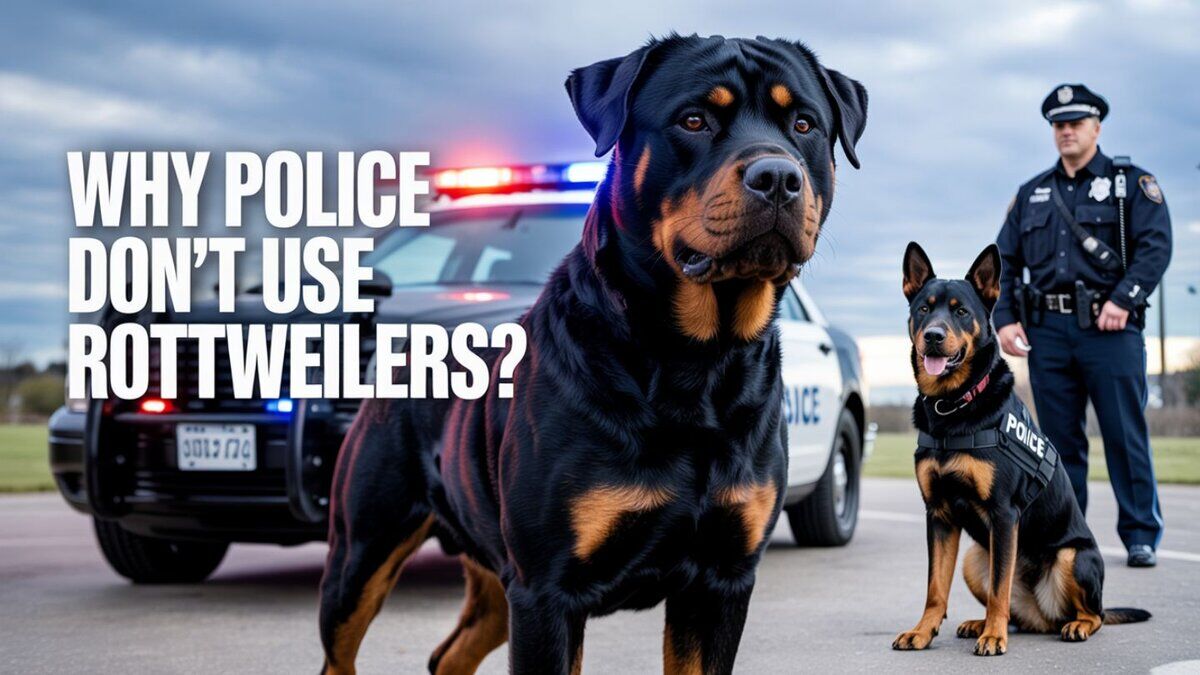
Why Don’t Police Use Rottweilers?
Police departments rarely use Rottweilers due to their temperament, control issues, and training complexities. While they have a history in law enforcement, other breeds offer more predictable behavior and adaptability. This blog will explore why Rottweilers are less favored and address the question of “why don’t police utilize Rottweilers,” comparing their strengths and weaknesses to other police dog breeds.
Key Takeaways
- Rottweilers have a historical background in law enforcement, but their limited adaptation to modern specialized police tasks has decreased their prevalence in police work.
- Training Rottweilers is challenging due to their dominant nature, requiring experienced handlers and significant resource investment, which can hinder their effectiveness compared to other breeds.
- Public perception and safety concerns surrounding Rottweilers, due to their aggressive reputation, often result in law enforcement agencies favoring breeds with more predictable temperaments.
Introduction to Police Dogs
Police dogs play a vital role in law enforcement, offering essential support in maintaining security and control across a wide range of situations. These highly trained animals work alongside officers to help protect people, enforce laws, and deter criminal activity. Their keen senses, loyalty, and ability to follow complex commands make them invaluable assets in police work. As the use of police dogs continues to grow, it’s important to review the different breeds and their unique characteristics to understand how they contribute to the effectiveness of law enforcement teams.
Characteristics of Police Dogs
The most effective police dogs share a set of key characteristics that make them well-suited for demanding law enforcement work. Intelligence, strength, and bravery are essential, as these dogs must be able to think quickly and act decisively in high-pressure situations. Stamina and resilience allow them to work for extended periods, often in challenging environments. Breeds like German Shepherds and Bull Terriers are popular choices due to their agility, protective instincts, and ability to maintain control in stressful scenarios. A thorough review of each dog’s temperament and abilities is crucial to ensure they can provide the level of security and control required for police duties.
Historical Use of Rottweilers in Police Work
Rottweilers have a rich history in law enforcement dating back to the late 19th century. Initially, they served as guard dogs for transporting valuable goods, showcasing their ability to remain calm under pressure while being assertive when necessary. This unique combination of traits made them ideal candidates for early police duties.
Their physical strength and intimidating appearance solidified their role in protection and crowd control during police operations. Rottweilers’ loyalty and protective instincts aligned perfectly with the demands of law enforcement, making them reliable partners in maintaining order and security.
However, the landscape of police work has evolved, and with it, the requirements for police dogs. The transition from traditional roles to more specialized tasks has influenced the choice of breeds, leading to a decline in the use of Rottweilers in favor of other breeds.
Temperament and Control Issues
Rottweilers are known for their confident and reliable nature, which can be a double-edged sword in police work. While their assertiveness is an asset, their suspicious behavior around strangers can pose control issues in public settings. This trait, combined with their imposing presence, can lead to negative public perception.
Despite their affection towards families and handlers, Rottweilers’ stronger protective instincts compared to German Shepherds make them less suitable for certain police roles. Their tendency to act aggressively without proper socialization poses a significant concern for police departments aiming to maintain a balanced and approachable image.
In environments where community interaction is crucial, Rottweilers’ control issues can overshadow their potential benefits, leading law enforcement agencies to choose breeds with more predictable temperaments.
Training Difficulties
Training Rottweilers presents unique challenges due to their dominant and strong-willed nature. They often require experienced handlers who can manage their temperament effectively. This need for expertise limits the pool of suitable trainers and complicates the training process.
Their independent streak can further complicate training. Rottweilers need consistent, firm training methods to overcome their stubbornness. However, they can become easily bored during repetitive drills, which hinders their ability to focus and learn.
Rottweilers have lower trainability compared to breeds like German Shepherds, impacting their effectiveness in police work. This lower trainability means they are less likely to excel in tasks that require high levels of obedience and agility.
Despite these challenges, Rottweilers can adapt to various environments with careful training and socialization. Their versatility is evident, but the time and effort required to achieve optimal performance make them less attractive for law enforcement agencies with resource constraints. Comprehensive K9 police dog training programs emphasize structured obedience, handler communication, and behavioral conditioning—essential elements that ensure even strong-willed breeds can perform reliably in high-stress situations.
Public Perception and Security Concerns

Public perception plays a crucial role in the selection of police dogs. Rottweilers often suffer from negative stereotypes that contribute to fear and hesitancy among the public. Their strong physical capabilities and protective nature can exacerbate these fears, leading to concerns about community acceptance.
The potential for aggressive behavior without proper socialization exacerbates these concerns. Police departments must consider the liability and potential attacks that could arise from employing Rottweilers, which discourages their use in favor of breeds with more predictable behavior patterns.
The goal is to ensure public safety and trust, which can be challenging with a breed that evokes both fear and admiration. This delicate balance influences the decision to favor other breeds over Rottweilers in police work.
Police Dog Roles
Police dogs are trained to perform a variety of roles that enhance control and security within law enforcement. They are frequently used in search-and-rescue operations, where their keen sense of smell helps locate missing people or evidence. In addition, police dogs play a critical part in bomb and drug detection, crowd control during public events, and maintaining order in correctional facilities. To better understand the purpose and effectiveness of canine law enforcement, it’s helpful to explore why police use K9S as integral members of modern security and investigation teams. Their ability to work in confined spaces and track suspects makes them indispensable in investigative work. The use of police dogs in these diverse roles has proven highly effective in protecting people and supporting the overall mission of law enforcement agencies.
Comparison with Other Breeds
When comparing Rottweilers to other breeds, like Belgian Malinois and German Shepherds, the differences become apparent. Belgian Malinois and German Shepherds are generally more agile, allowing for quicker responses during police pursuits. This agility is crucial in high-stress situations where speed and maneuverability are essential.
Rottweilers can be easily distracted, especially in environments with heightened activity or stress. This distractibility limits their effectiveness in specific roles, such as detection work, where focus is paramount. Belgian Malinois and German Shepherds are preferred for roles requiring high agility and focus.
Some breeds offer higher levels of adaptability for specialized tasks, making them more favorable for roles requiring versatility and quick learning. These factors contribute to the preference for other breeds over Rottweilers in police work. Understanding the best dog breeds for police K9 training provides deeper insight into why some breeds consistently outperform others in agility, obedience, and focus under pressure.
Adaptability to Various Tasks
German Shepherds are often the go-to breed for police work due to their versatility in various tasks. However, Rottweilers are recognized for their strength and endurance, making them effective in patrol and protection roles. They can be trained for diverse tasks, including:
- Detection work
- Search-and-rescue missions
- Security and guarding tasks within law enforcement
Their protective nature makes them suitable for these roles.
With the right training, Rottweilers can exhibit high levels of obedience and effectiveness in various law enforcement tasks. Their capability to excel in roles such as protection, detection, and assistance highlights their potential, albeit with certain limitations.
Despite their strengths, the need for careful training and socialization cannot be overstated. Ensuring that Rottweilers reach their full potential requires significant investment in time and resources, which some police departments may find challenging.
Breed Selection Criteria
Selecting the right breed for police work involves a careful review of several important factors. Intelligence, agility, and a strong protective instinct are essential traits, as is the ability to work effectively in various environments. Police departments assess each breed’s history, temperament, and trainability to determine its suitability for specific tasks. The use of police dogs in roles such as detection, tracking, and crowd control requires a deep understanding of their strengths and limitations. By thoroughly reviewing these criteria, law enforcement agencies can ensure they are using the most effective breeds to provide optimal security and control in their operations.
Case Studies and Real-World Examples
Real-world examples show that Rottweilers can be effective in police work when properly trained and selected. These instances highlight the breed’s potential to excel in specific roles, showcasing their strength and loyalty.
Organizations report a low error rate in selecting Rottweilers for police work, further validating their effectiveness when the right individuals are chosen and trained appropriately. These success stories provide valuable insights into the capabilities of Rottweilers, reinforcing their potential as valuable assets under the right conditions.
Expert Opinions
Law enforcement and canine training experts have varied opinions on using Rottweilers. Some highlight the challenges of their strong-willed temperament, which requires experienced handlers to achieve effective training outcomes. The need for expertise can be a limiting factor.
Others point out that the intimidating appearance of Rottweilers impacts their acceptability and effectiveness in police environments for people. This perception can influence public interaction and overall community trust.
Despite these challenges, experts acknowledge that Rottweilers can be effective in certain situations, particularly in protection and deterrence roles. However, they may struggle with agility-based tasks compared to other breeds, requiring careful evaluation of departmental needs and community perceptions.
Future of Police Dog Breeds
Looking ahead, the future of police dog breeds will likely see a continued reliance on proven breeds like German Shepherds and Belgian Malinois, while also exploring the potential of newer breeds such as the Cane Corso. As law enforcement agencies review and adapt to emerging challenges, the use of advanced training techniques and technology will further enhance the effectiveness of police dogs. This ongoing evolution will help maintain high standards of security and control, ensuring that police dogs remain a vital resource for protecting people and upholding public safety. By staying informed about the latest developments, agencies can make the best use of available breeds and training methods to meet their unique needs.
The Role of Rottweilers and the Future of Police K9 Selection
While Rottweilers possess remarkable strength, intelligence, and loyalty, their limited use in modern law enforcement stems from practical challenges. Factors such as handling difficulty, temperament variability, and breed perception have led departments to favor more adaptable breeds like German Shepherds and Belgian Malinois. Still, Rottweilers remain highly capable in the right hands, excelling in security, protection, and specialized detection when trained with precision and discipline. The key lies in matching each dog’s natural aptitude with the operational demands of the force.
At Custom Canine Unlimited, we specialize in training and developing elite K9 teams built for performance and reliability. Our expertly bred and professionally trained working dogs for sale are prepared for service, detection, and protection roles across multiple environments. Whether you’re seeking dependable K9 partners or advanced handler training, we deliver tailored programs that set the standard for excellence in professional canine operations.
Frequently Asked Questions
Why don’t police use Rottweilers more frequently?
Police often opt against using Rottweilers because of their challenging temperament and potential public perception issues, which can complicate their integration into law enforcement roles.
Are Rottweilers effective in police work?
Rottweilers can indeed be effective in police work, particularly in roles involving protection and deterrence, provided they are properly trained and selected for such tasks. Their strength and loyalty make them suitable for certain law enforcement duties.
How do Rottweilers compare to other police dog breeds?
Rottweilers are generally less agile and more easily distracted than breeds such as the Belgian Malinois, which can make them less suitable for specific police tasks. Therefore, while they possess strength and loyalty, other breeds may excel in agility and focus.
What are the main challenges of training Rottweilers for police work?
Training Rottweilers for police work presents significant challenges due to their dominant and strong-willed nature, which requires experienced handlers, and their tendency to become bored with repetitive tasks. Effective engagement and consistent training strategies are essential for success.
Can Rottweilers be trained for specialized police tasks?
Rottweilers can indeed be trained for specialized police tasks, including detection work and search-and-rescue missions, provided they receive appropriate training and socialization. Their strong work ethic and trainability make them suitable candidates for such roles.
Share this article

Written by : AJ Vargas
AJ Vargas is a highly skilled Canine Trainer at Custom Canine Unlimited, bringing extensive hands-on experience in law enforcement, working dogs, and specialized K9 operations. With a deep commitment to public safety and canine performance optimization, AJ has trained and deployed working dogs in high-stakes environments, supporting law enforcement agencies and security teams across the country. His expertise spans obedience, detection, patrol work, and real-world deployment readiness, ensuring both dogs and handlers achieve operational excellence. At Custom Canine Unlimited, AJ continues to advance canine training standards, helping shape top-tier K9 teams that deliver measurable results in the field.
Follow us
A quick overview of the topics covered in this article.

