

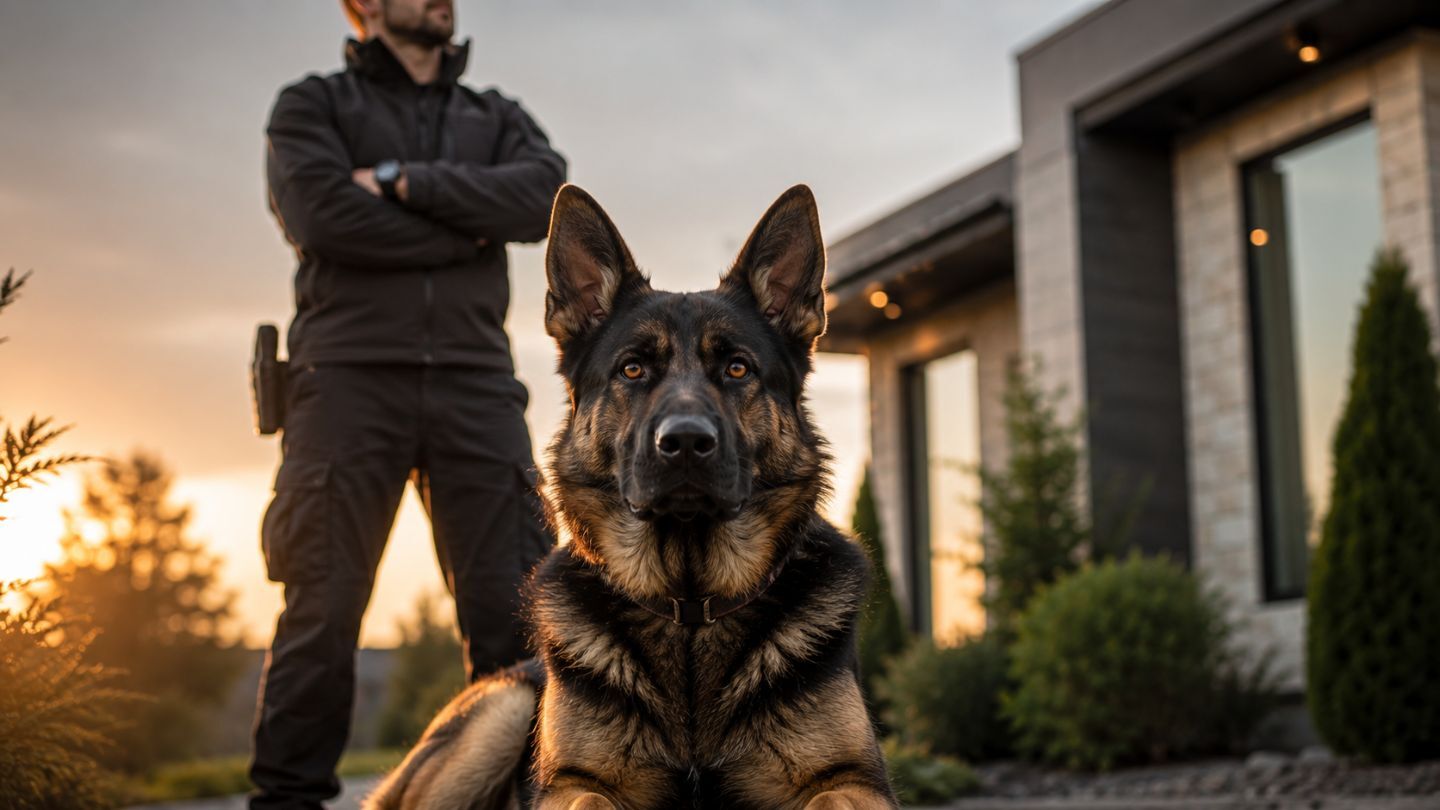
Top 5 Qualities to Look for in a Protection Dog
Selecting the right protection dog for your family is one of the most consequential decisions you can make for your household’s security. The top 5 qualities to look for in a protection dog, stable temperament, proper drive, intelligence, physical health, and proven genetics, are what separate a reliable protector from an ordinary pet or, worse, a liability. These key qualities work together to create a dog that can defend your family while remaining safe around small children, other animals, and guests.
Professional protection dogs undergo rigorous evaluation and training that most family pets never experience. Understanding what makes excellent guard dogs effective helps you identify the right dog for your specific situation. This blog covers each essential quality in depth, explaining how to recognize these traits and why they matter for protection work.
Key Takeaways
- Stable temperament and confidence are non-negotiable for safe protection work around family members and children
- Proper defensive and prey drive determine a dog’s protective capabilities and cannot be trained into a dog; they must be present naturally
- Intelligence and trainability enable complex protection commands, situational awareness, and the ability to assess situations correctly
- Physical health and athleticism ensure reliable performance under stress throughout the dog’s working life
- Proven bloodlines and genetics provide the foundation for all other qualities, with heritability studies showing these traits pass through generations
Stable Temperament and Confidence
A suitable protection dog must possess unshakeable confidence, nerve strength, and a calm demeanor without unpredictable aggression. This temperament forms the cornerstone of every effective family protection dog. Without it, even the strongest or most athletic dog becomes a risk rather than an asset.
A great guard dog possesses a stable temperament, allowing them to remain calm and assess situations without overreacting, which is crucial for effective protection. Dogs with controlled protective instincts know when to act and when to hold back, making them reliable protectors without being overly aggressive. A stable temperament in a protection dog means they are easy to handle and live with, which is essential for families looking for a reliable guardian.
The difference between fearful aggression and controlled protection behavior is critical to understand. Fearful dogs may bite unpredictably when startled or cornered; this is not protection work but dangerous reactivity. Not all aggressive behavior is indicative of a good protection dog; such behavior can be a sign of poor training or unstable temperament. True protection dogs engage threats purposefully and under handler control, transitioning smoothly from calm family companion to active defender when commanded, which is an important consideration when understanding personal protection dogs for women.
Studies of German Shepherds show that traits like self-confidence, nerve stability, temperament, and hardness have heritabilities ranging from approximately 0.09 to 0.24. This means these traits are genetically influenced, making proper breeding essential, though environment and training also play significant roles in development.
Signs of Proper Temperament in Protection Dogs
Behavioral indicators of stable, confident protection dogs include controlled social interactions with humans and other dogs, neutral responses to loud sounds like gunfire or fireworks, and immediate focus on handler cues rather than acting independently in ambiguous situations. These dogs show curiosity rather than fear in novel environments.
Proper socialization supports temperament development significantly. Early socialization, including exposure to various people, environments, and controlled stressors, helps dogs develop the confidence needed for protection work and also underpins distinctions between roles like service dogs vs emotional support dogs. Well-socialized dogs can distinguish between normal behavior and legitimate threats, reducing unnecessary aggression toward family members, kids, or visitors.
Protection dogs should have the ability to distinguish between normal behavior and legitimate threats to reduce unnecessary aggression. Dogs remaining calm under pressure is essential: a dog that panics during stress cannot protect anyone. Look for dogs that recover quickly from startling stimuli and return their attention to their handler for guidance.
Proper Drive and Instincts

Defense drive and prey drive are the engines of protection work. Defense drive motivates a dog to guard, protect, and engage when commanded or when facing a real threat. Prey drive provides the motivation to pursue, chase, grip, and hold, behavioral tools essential for bite work and controlled apprehension.
Balanced drives, such as prey drive and defense drive, are important for protection dogs, allowing them to be controlled in their actions. Studies show prey drive heritability in German Shepherds at approximately 0.31, confirming that drive cannot be trained but must be bred into the dog. You can refine and channel existing drive-through training, but you cannot create a drive that isn’t there.
Natural instincts such as alertness and discernment are critical for protection dogs to identify danger and react immediately. A great guard dog possesses controlled protective instincts, knowing when to act and when to hold back, which is developed through proper training and socialization working alongside natural instinct, often refined through programs offered by top canine dog training facilities in Gainesville, GA.
The ideal drive level is high enough to motivate intense work but tempered by obedience and handler control. Extremes in either direction create problems: insufficient drive produces a dog that won’t engage threats, while excessive drive without control leads to dangerous biting or chasing of non-threats. A true protection dog is trained to bite and release on command, showcasing control by the handler.
Identifying Drive in Young Protection Dogs
Early indicators of proper drive appear in puppies through their intensity during tug games, chase behavior with moving objects, grip and hold strength, and reactions to mild threat simulations. Professional evaluators assess drive potential by observing how puppies handle frustration, whether they show boldness without hostility, and their assertiveness balanced with acceptance of correction.
The genetic nature of drive inheritance means breeding programs track these traits across generations. Research shows genetic correlations between defense drive, fighting drive, and temperament behaviors can approach 1.0 between certain traits in behavior tests, meaning these characteristics cluster together in breeding lines.
Breeders focused on producing good dogs for protection work conduct structured puppy assessments between 7-24 weeks of age. These evaluations examine reactions to sudden sounds, willingness to engage with handlers, intensity of play, and early defensive responses. Dogs showing appropriate drive levels at this age typically develop into reliable protectors with the right training.
Intelligence and Trainability
Intelligence and trainability are crucial traits for a protection dog, as they need to quickly learn commands and adapt to complex situations, making them effective guardians. High trainability and intelligence are essential for protection dogs, enabling them to follow commands under pressure and discern between threats and friends.
Protection dogs must process complex situations rapidly: deciding whether to escalate defense, whether to retreat or delay action, and reading handler cues in chaotic environments. This requires problem-solving abilities beyond basic obedience. The best guard dogs demonstrate situational awareness that allows them to assess situations correctly without handler intervention.
Responsiveness and obedience are essential qualities in a protection dog, ensuring they react promptly to commands and are reliable in critical situations. Trainability encompasses willingness to learn, focus under distraction, ability to generalize commands across environments, and stress tolerance. A dog that performs perfectly in training but falls apart in real-world chaos provides no actual protection.
Genetic mapping across 130 dog breeds has identified loci associated with temperament, herding, and trainability. These traits correlate with behaviors supporting protection work: obedience under stress, problem-solving, and impulse control. German Shepherds show trait estimates for intelligence-related behavior with moderate heritability between 0.10 and 0.23, depending on specific behaviors measured.
Custom Canine Unlimited emphasizes handler and team training because even highly trainable dogs require skilled guidance. Training methods that build from minimal distractions to graduated stress levels align with scientific understanding of how dogs learn complex behaviors. The training process for protection dogs typically involves several phases, including basic obedience, advanced protection training, and ongoing socialization to ensure they remain effective guardians, just as structured service dog training programs build reliability for assistance work.
Physical Health and Athletic Ability
Protection dogs must possess strength, endurance, and physical health to perform tasks requiring quick reflexes. The physical demands of protection work, sprinting, jumping, rough terrain navigation, bite work, restraining threats, patrol endurance, require sound joints, cardiovascular health, strong musculature, good vision, and hearing.
A good guard dog should possess physical stamina and strength, allowing them to stay alert for extended periods and handle potential threats effectively. The ideal protection dog should have a balanced combination of weight and speed, which enhances their effectiveness in protective situations. Physical attributes such as size and strength can serve as a deterrent to potential intruders, making breeds like the Great Dane particularly effective as watchdogs.
Breed-specific health considerations vary significantly among protection dog breeds. Working line German Shepherds typically have better joint conformation than show lines, which often exhibit exaggerated hindquarter angulation that exacerbates orthopedic problems. Dutch Shepherds show approximately 9% hip dysplasia and 5.5% elbow dysplasia in evaluated populations, lower than many other breeds.
Maintaining physical fitness throughout the dog’s career requires ongoing attention. Surveys reveal 45.5% of working dogs experience injury during their careers. Preventive protocols, including warm-up and cool-down routines, joint supplements, and structured fitness conditioning, are essential but underutilized; only 36-55% of handlers conduct pre-activity medical screening. Athletic requirements, including speed, strength, and endurance, must be developed and maintained throughout the dog’s working life.
Proven Bloodlines and Genetics
Protection dogs must have solid genetics from reputable working lines to ensure effectiveness in their roles. A dog’s pedigree, including a five-generation lineage, is crucial for assessing its suitability as a protection dog, as it reflects the dog’s working lineage and potential capabilities.
Behavioral traits, including aggression, fear, defense, and trainability, are not evenly distributed across all dogs; they vary between individuals and can be linked to specific genetic loci. Multi-generation pedigrees in protection dog selection allow evaluation of how consistently these traits appear in breeding lines.
Working lineage affects protection capabilities and reliability directly. Studies of Belgian Shepherds examining defense capacity, ability to guard, attack on command, and grip, showed heritability and selection response over successive generations. Programs that select for working performance over multiple generations produce more consistent protection dogs than random breeding.
The comparison between working line breeding versus show line breeding for protection purposes is stark. Working lines emphasize leaner bodies, moderate conformational angles, stronger joints, higher activity levels, and stronger drives. Show lines often prioritize appearance over function, sometimes at the expense of the traits that make excellent guard dogs effective. German Shepherd show lines face criticism for exaggerated angulation that reduces mobility essential for protection work.
The Belgian Malinois, German Shepherd, Dutch Shepherd, and Rottweiler are among the best dog breeds for protection due to their intelligence, loyalty, and trainability. German Shepherds and Belgian Malinois are particularly noted for their unwavering loyalty and courage, making them exceptional personal protection dogs. The Akita is recognized as one of the most loyal and protective dog breeds, historically used for hunting and personal protection. Doberman Pinschers are known for their alertness, agility, and strength, making them effective guardians for homes and properties.
Evaluating Protection Dog Pedigrees
Key elements to look for in protection dog pedigrees include parents’ working titles in protection, patrol, or trial competitions; health clearances for hips, elbows, eyes, and cardiac function; temperament test results; and documented successes across multiple generations. Both parents’ working credentials matter equally.
Researching breeding programs requires examining whether breeders test behavior systematically, raise puppies with environmental stressors from an early age, and track outcomes of previous litters. Reputable breeders maintain records of where their dogs end up and how they perform in protection work, police service, or protection sports.
Various breeds can produce effective protection dogs, but not all individual dogs within those breeds possess the necessary qualities. Breeding dogs specifically for protection work requires different priorities than breeding for conformation or companionship. The best protection dogs come from programs that have selected for working traits across many generations, creating genetic consistency that puppy evaluations can then confirm.
Choosing the Right Protection Dog for Long-Term Confidence
Finding the right protection dog requires careful attention to temperament, intelligence, loyalty, confidence, and trainability. A well-trained protection dog should provide both security and companionship while remaining calm and controlled in different situations. Understanding these qualities helps families and handlers choose a dependable dog that offers safety, trust, and long-term reliability.
Custom Canine Unlimited provides expert protection dog training designed to develop obedient, confident, and reliable protection dogs for families and professional handlers. We proudly offer dog training in Georgia, Gainesville, and Columbus to support a wide range of behavioral and protection training needs. Let us help you build a stronger bond with a professionally trained dog that delivers safety, discipline, and lasting peace of mind.
Frequently Asked Questions
Can protection dogs be safe family pets with the right qualities?
Yes, protection dogs with stable temperament make excellent family companions. Dogs with controlled protective instincts know when to act and when to hold back, which is essential for life with children and other pets. A stable temperament means the dog is easy to handle and live with, transitioning smoothly between relaxed family member and active protector when needed.
At what age can you evaluate these qualities in protection dog candidates?
Professional evaluators begin assessing drive and temperament in puppies as young as 7-24 weeks, though comprehensive evaluation continues through adolescence. Early indicators of proper drive appear in puppy play behavior, while temperament stability becomes more apparent around 12-18 months. Health testing for hips and elbows typically occurs after growth plates close, usually around 24 months.
Do all protection dog breeds possess these five qualities equally?
No, various breeds show different strengths across these qualities. German Shepherds and Belgian Malinois are particularly noted for trainability and loyalty, while Rottweilers offer exceptional strength. Individual variation within breeds is significant; pedigree and breeding program matter more than breed alone. The Australian Shepherd and other breeds not traditionally associated with protection work may lack sufficient defense drive despite high intelligence.
How important is professional training compared to natural qualities?
Natural qualities are the foundation that cannot be created through training; you cannot train drive, temperament, or health into a dog. However, proper training is essential for channeling these qualities into controlled, reliable protection behavior. A true protection dog is trained to bite and release on command, demonstrating that both natural ability and expert training are necessary for a reliable protector.
What happens if a protection dog lacks one of these essential qualities?
Missing qualities create specific problems. Dogs lacking a stable temperament may become fear-biters, dangerous to family and bystanders. Dogs without proper drive won’t engage threats when needed. Poor health limits working career and reliability. Weak genetics means inconsistent transmission of traits to offspring. Professional evaluation identifies these gaps before the dog enters protection work or a family environment.
Can these qualities be developed, or must they be present from birth?
Core qualities, temperament foundation, drive levels, and genetic health must be present from birth and are inherited from parents. Training and socialization develop and refine existing qualities, but cannot create what isn’t there genetically. This is why proven bloodlines matter: breeders selecting for protection work across generations produce puppies with a higher likelihood of possessing the necessary natural traits that training then develops into reliable protection behavior.
Share this article

Written by : AJ Vargas
AJ Vargas is a highly skilled Canine Trainer at Custom Canine Unlimited, bringing extensive hands-on experience in law enforcement, working dogs, and specialized K9 operations. With a deep commitment to public safety and canine performance optimization, AJ has trained and deployed working dogs in high-stakes environments, supporting law enforcement agencies and security teams across the country. His expertise spans obedience, detection, patrol work, and real-world deployment readiness, ensuring both dogs and handlers achieve operational excellence. At Custom Canine Unlimited, AJ continues to advance canine training standards, helping shape top-tier K9 teams that deliver measurable results in the field.
Follow us
A quick overview of the topics covered in this article.

