

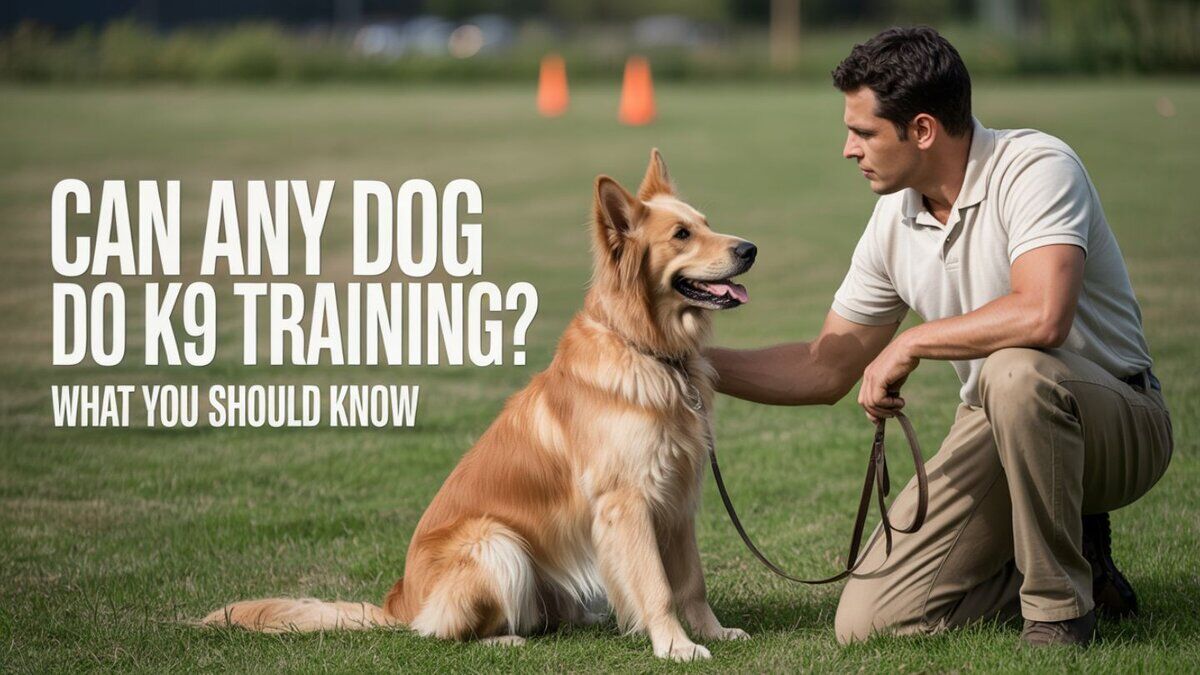
Can Any Dog Do K9 Training?
K9 dogs are more than loyal companions; they’re vital partners in law enforcement, search and rescue, and public safety operations. But can any dog undergo K9 training? While most dogs can learn obedience and basic tasks, not every breed possesses the intelligence, stamina, and temperament needed for the rigorous demands of professional K9 work. From drug detection to suspect apprehension, only certain breeds are equipped to handle these high-pressure roles. In this blog, we’ll explore what sets successful K9 candidates apart, highlight the breeds most commonly used in police work, and uncover the specialized training that turns these extraordinary dogs into trusted protectors and lifesavers.
Key Takeaways
- K9 teams are essential in law enforcement for tasks such as drug detection and suspect apprehension, relying on dogs’ unique abilities and extensive training.
- Ideal K9 candidates require a combination of intelligence, trainability, physical condition, and temperament, with certain breeds like German Shepherds and Belgian Malinois commonly preferred.
- K9 dogs are categorized as either single-purpose or dual-purpose, with specialized training necessary for their specific roles and a strong handler-dog bond crucial for effectiveness.
The Role of K9 Training
K9 teams are among the most effective tools in modern policing, playing a vital role in public safety and order. These canine companions assist law enforcement in various tasks, from detecting illegal substances to tracking suspects and locating missing persons. With their incredible sense of smell, boasting 225 million odor receptors, dogs can detect drugs, explosives, and other contraband with remarkable accuracy. This makes them indispensable in areas such as airports, border entries, and large public events, often working in conjunction with the police department.
The training of police dogs is extensive and rigorous, ensuring they possess qualities such as:
- Loyalty
- Intelligence
- Bravery
- The ability to protect their handlers and the public
These dogs are trained to apprehend suspects by bite and holding them, providing a crucial line of defense for officers in dangerous situations while apprehending criminals on the job.
Beyond their role in crime detection and suspect apprehension, K9s are also invaluable in search and rescue missions, capable of quickly covering large areas and searching through debris to locate missing people.
For those interested in learning more about how working dog breeds contribute to this vital field, it’s worth understanding the importance of working dog breeds and how their innate drive and discipline make them indispensable partners in law enforcement.
Police dog breeds have been assisting law enforcement for over a century, proving their effectiveness time and again. Breeds like German Shepherds and Belgian Malinois are particularly noted for their ability to detect drugs and explosives, apprehend criminals, and participate in search and rescue operations. The success of K9 teams relies not only on the dogs’ abilities but also on the support from police management and sufficient funding for their training.
Characteristics of Ideal K9 Candidates

To become a successful K9, a dog must possess a combination of physical traits and temperament that make them suitable for the demanding tasks they will face. Intelligence is a critical factor, as K9s need to learn and execute a variety of tasks quickly and efficiently. Trainability is equally important; a K9 must be able to follow commands without distraction, ensuring they can perform their duties reliably in high-pressure situations.
Physical condition and stamina are also essential for K9 candidates. These dogs must be in excellent health, with the endurance to perform their duties over extended periods. Size and play drive are significant factors; larger, more energetic breeds are generally preferred for K9 roles. However, certain physical limitations, such as those found in small or brachycephalic breeds, can disqualify some dogs from K9 work.
The temperament of a K9 is crucial. These dogs must be confident, able to handle stress, and maintain focus even in chaotic environments. Obedience and responsiveness to their handler are vital traits, ensuring that the dog can work closely with their human partner and perform tasks as needed.
Additionally, genetic health issues can affect a dog’s suitability for K9 training, as breeds prone to certain health problems may be at a higher risk of injury. Understanding the difference between a working breed and a working dog can help trainers identify which dogs are naturally inclined toward law enforcement and high-performance roles.
Popular Police Dog Breeds
Many dog breeds can fulfill the demanding roles required in police work, but some breeds have proven to be particularly effective. Among the most popular police dog breeds are:
- German Shepherds
- Belgian Malinois
- Labrador Retrievers.
These breeds are known for their incredible working ability, cooperative nature, and tenacity when confronting their tasks.
The following breeds are often chosen for their specific traits that make them ideal for various K9 tasks.
German Shepherds
German Shepherds are almost synonymous with police work, thanks to their intelligence and adaptability. These dogs possess a strong work ethic and are capable of performing a wide range of tasks, from detecting contraband to apprehending suspects. Their ability to learn quickly and their physical prowess make them ideal for roles that require both mental and physical agility.
For more information on breeds commonly used in policing, you can learn about the best dog breeds for police K9 training and discover why certain dogs consistently outperform others in demanding law enforcement tasks.
Belgian Malinois
The Belgian Malinois is another breed frequently utilized in K9 training, known for its quick reactions and athletic build. These dogs excel in tasks that require agility and speed, such as explosive detection and suspect apprehension. Their ability to absorb training quickly makes them highly effective in various law enforcement roles.
In tense situations, the Belgian Malinois is particularly valuable due to its ability to react swiftly. This breed’s keen detection abilities and strong drive to work make it a preferred choice for many law enforcement agencies seeking reliable K9 partners.
Labrador Retrievers
Labrador Retrievers are often selected for police roles due to their friendly nature, which helps ease public anxiety in high-traffic areas. These dogs are particularly effective in drug detection, where their non-threatening demeanor allows them to operate in environments that might be stressful for other breeds.
Originally bred as working dogs, Labrador Retrievers possess the intelligence and eagerness to learn that are essential for K9 roles. Their ability to locate drugs and other illegal substances in various settings, from residential areas to vehicles, makes them invaluable assets in law enforcement.
Those exploring different options should also consider good working dog breeds that demonstrate exceptional drive, adaptability, and consistency in real-world situations.
Other Suitable Breeds
While German Shepherds, Belgian Malinois, and Labrador Retrievers are among the most popular police dog breeds, many other breeds are also effective in K9 roles. Bloodhounds, for example, are renowned for their exceptional odor-tracking abilities:
- They have the most sensitive noses of all dog breeds.
- They are often used in search and rescue missions.
- They can track odor over long distances and challenging terrains.
Beagles, with their compact size and excellent sense of smell, are particularly adept at detecting illegal substances, especially in tight spaces like airports. Other breeds, such as American Pit Bull Terriers and Boxers, are becoming more popular in law enforcement due to their strong protective instincts and capabilities.
These breeds demonstrate the versatility and range of abilities that different dog breeds can bring to K9 roles.
Single Purpose vs. Dual Purpose Dogs
In the world of K9 training, dogs can be classified as either single-purpose or dual-purpose. Single-purpose dogs are trained to perform one specific task, such as drug detection. These dogs are highly specialized and excel in their designated roles, providing focused and reliable service in their area of expertise.
Dual-purpose dogs, on the other hand, are trained to handle multiple tasks, making them versatile assets for law enforcement. These dogs are often selected for their high energy and strong drive to work, enabling them to perform a variety of duties during a single training program. Whether it’s detecting explosives, tracking suspects, or protecting officers, a dual-purpose dog is invaluable in their ability to adapt to different situations.
Basic Training Requirements
The basic training for K9 dogs is comprehensive and demanding, covering a wide range of skills necessary for their roles in law enforcement. This includes obedience training, agility exercises, and odor detection techniques. Proper training ensures that K9s can perform their duties reliably and effectively, even in challenging conditions.
Many law enforcement agencies participate in certification trials to assess the effectiveness of their K9 teams under simulated conditions. These trials, along with real-life scenario training, prepare law enforcement teams for the actual challenges they will face on the streets.
Environmental testing is also crucial, helping K9s adapt to various scenarios they might encounter during their duties.
Specialized Training Programs
Beyond basic training, specialized programs are essential for K9s that will be performing specific tasks. Drug detection K9s, for example, undergo training that involves hidden drugs, with incentives to encourage specific odor response. These dogs are trained to locate drugs in various settings, including residential areas and vehicles, showcasing their special skills.
Explosive detection K9s are trained using odor association methods, often through games that make the training process engaging and effective. These dogs employ a passive alert such as sitting when they detect an explosive, ensuring safety during their operations.
Search and rescue K9s must earn Urban Search and Rescue (USR) certification from FEMA, demonstrating their proficiency in skills like agility and command response in challenging environments.
The Handler’s Role
The bond between a K9 and its handler is crucial for effective teamwork. This relationship is built on:
- Mutual trust and respect, established during training
- Handlers play a vital role in ensuring the safety and efficiency of their K9 human partners, including aspects of handler protection
- Handlers spending more time with their dogs than with anyone else
This close bond enhances the dog’s ability to understand and perform its intelligent tasks.
Loyalty, courage, and focus are essential traits for K9s, enabling them to support their handlers in various situations. Handlers must be adept at managing their dogs, ensuring they remain focused on their duties even amidst distractions or chaos. This strong partnership ensures that both the K9 and the handler can perform their roles effectively and safely.
Can Any Dog be Trained as a K9?
Not all dogs can do K9 training; only certain breeds with the right combination of traits are typically used. Labrador Retrievers, for example, are preferred for their friendly demeanor and ability to operate effectively in high-traffic areas for drug detection. The bond between a handler and a K9 is essential for ongoing training and enhances the effectiveness of the K9 team.
While many breeds can perform K9 roles, the selection process is rigorous to ensure that only the best candidates are chosen. This ensures that the dogs can meet the high demands of their duties and work efficiently with their handlers to keep communities safe.
Final Thoughts
K9 teams play an essential role in modern law enforcement, offering unmatched support in detecting illegal substances, apprehending suspects, and executing complex search and rescue missions. However, not every dog is built for the rigorous demands of K9 service. This blog explores which breeds excel in police and military work, the key characteristics of successful K9 candidates, and the intensive training that transforms them into dependable partners. From understanding the difference between single-purpose and dual-purpose K9s to examining their specialized training programs, readers will gain insight into what it truly takes to develop these exceptional canine heroes.
At Custom Canine Unlimited, a leader in K9 training in Gainesville, we specialize in preparing dogs and handlers for the challenges of real-world operations. Our programs are designed for law enforcement, military, and professional trainers, ensuring each K9 team reaches peak performance. Explore our comprehensive training options, including online K9 courses, law enforcement K9 training, military MWD training, professional dog training, advanced series K9 training, and even our puppy class. Whether you’re training for law enforcement deployment or building foundational obedience, our team delivers the highest standard of canine education and support.
Frequently Asked Questions
What characteristics make an ideal K9 candidate?
The ideal K9 candidate should exhibit intelligence, high trainability, excellent physical condition, and a strong ability to handle stress while maintaining focus. These characteristics are essential for successful performance in their roles.
Which breeds are most commonly used as police dogs?
German Shepherds, Belgian Malinois, and Labrador Retrievers are the most commonly used breeds for police work due to their exceptional working ability and cooperative temperament.
What is the difference between single-purpose and dual-purpose dogs?
Single-purpose dogs are trained for one specific task, such as drug detection, whereas dual-purpose dogs are equipped to perform multiple tasks, demonstrating greater versatility in their roles.
What specialized training do K9s undergo?
K9s undergo specialized training for tasks such as drug detection, explosive detection, and search and rescue, utilizing specific techniques and certifications. This rigorous training ensures their effectiveness in various critical roles.
Can any dog do K9 training?
Not all dogs can undergo K9 training; specific breeds with the right traits are preferred. Additionally, a strong bond between the handler and the dog is essential for successful training.
Share this article

Written by : AJ Vargas
AJ Vargas is a highly skilled Canine Trainer at Custom Canine Unlimited, bringing extensive hands-on experience in law enforcement, working dogs, and specialized K9 operations. With a deep commitment to public safety and canine performance optimization, AJ has trained and deployed working dogs in high-stakes environments, supporting law enforcement agencies and security teams across the country. His expertise spans obedience, detection, patrol work, and real-world deployment readiness, ensuring both dogs and handlers achieve operational excellence. At Custom Canine Unlimited, AJ continues to advance canine training standards, helping shape top-tier K9 teams that deliver measurable results in the field.
Follow us
A quick overview of the topics covered in this article.

