

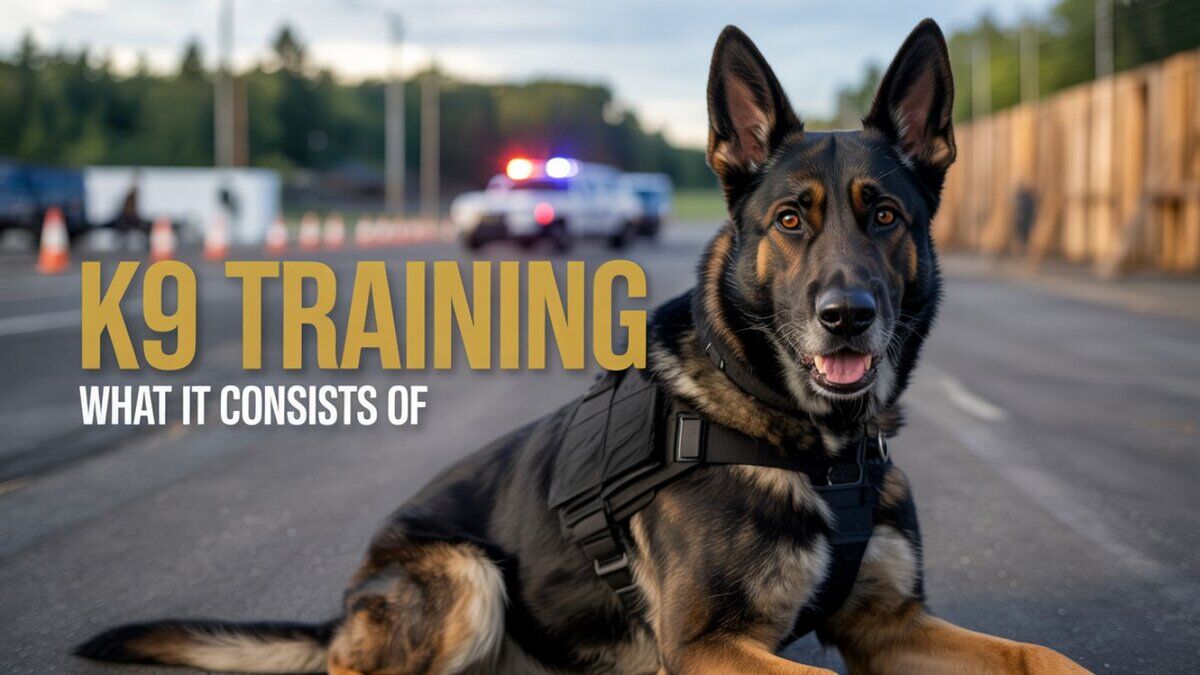
What Does K9 Training Consist Of?
Police dog training is an intensive, multi-phase process designed to transform highly capable dogs into reliable law enforcement partners. From building flawless obedience to mastering detection, tracking, and patrol skills, every stage strengthens public safety. Careful breed selection and expert handler training ensure peak performance. Advanced conditioning prepares these K9 teams for real-world challenges. In this blog, we explore each component of K9 training and its critical role in modern policing.
Key Takeaways
- K9 training has evolved from historical military use to structured police programs, significantly contributing to modern law enforcement since the 1950s.
- Selecting appropriate dog breeds, such as German Shepherds and Belgian Malinois, is critical for police work due to their strength, agility, and trainability.
- Comprehensive training components, including obedience, detection, and specialized skills, are essential for maximizing a K9 unit’s effectiveness in various operational roles.
History of K9 Training
The use of dogs in military and law enforcement roles dates back to ancient times. As early as 479 BC, during Xerxes’ invasion of Greece, dogs were employed for their keen senses and loyalty. Fast forward to the late 19th century in Ghent, Belgium, where formal canine training programs were initiated to address a shortage of police officers, marking the beginning of structured police dog training.
The evolution of police dog programs continued to gain momentum, especially in the United States. The Baltimore K9 program of the 1950s garnered national recognition, paving the way for police dog programs across the country. By the 1970s, police dogs had become an integral part of law enforcement in the U.S., undertaking various specialized roles ranging from patrol duties to detection work.
These historical milestones highlight the enduring value of K-9 teams in maintaining public safety and serving as a law enforcement tool in enforcing the law.
Selecting the Right Breeds for Police Work

Selecting the right breed for police work is crucial to a K9 unit’s effectiveness. Germany led the way in the 1920s with structured dog training programs, focusing on breeds like:
- German Shepherds
- Belgian Malinois.
These breeds were chosen due to their:
- Strength
- Agility
- Trainability
German Shepherds, in particular, have a long-standing history in police work, valued for their versatility and ability to perform a wide range of tasks.
Belgian Malinois are often favored for their agility, intelligence, and cooperative nature, making them ideal for demanding police work.
Labrador Retrievers, known for their excellent sense of smell and friendly disposition, are also highly effective in detection roles, particularly in drug and explosives detection. The Dutch Shepherd is another versatile breed utilized for both detection and protection duties.
The diverse characteristics of these breeds ensure that police departments can select the most suitable dogs for specific operational needs.
Selecting the right breed and building obedience skills are vital steps in police K9 training, ensuring dogs are prepared for complex law-enforcement tasks.
Core Components of Police Dog Training
Comprehensive training programs tailored to specific operational needs form the foundation of effective K9 teams. These programs typically include obedience training, detection work, and tracking and search skills, each playing a crucial role in enhancing a dog’s proficiency in the field.
Obedience training establishes a strong bond between the dog and handler, ensuring that the dog can follow essential commands during operations. Detection work leverages a dog’s acute sense of smell to identify substances like narcotics and explosives.
Tracking and search skills leverage a dog’s natural instincts to locate missing persons, track suspects, and recover evidence. These components collectively ensure the overall effectiveness of police dog training.
Obedience Training
Obedience training is the bedrock of any successful K9 program. Police dogs learn to respond to basic commands such as:
- ‘Sit’
- ‘Stay’
- ‘Come’
- ‘Heel’
These commands are essential for maintaining control during high-pressure situations. The process requires patience and consistency from both the handler and the dog, fostering a strong bond that enhances communication and response.
Trust and obedience ensure that police dogs can perform effectively under various circumstances. Whether during a routine patrol or a high-stakes operation, the ability to follow commands without hesitation can determine success or failure. Hence, obedience training is an indispensable part of police dog training, setting the stage for more specialized skills.
Detection Work
Detection work is a specialized area of K9 training that relies heavily on a dog’s exceptional sense of smell. Police dogs are specifically trained to identify odors associated with narcotics and explosives, which are critical in various law enforcement operations. This training involves familiarization with the odors of different substances, reinforcing the dog’s ability to detect these odors accurately.
Drug detection training conditions dogs to recognize various drug odors, while explosives detection trains them to identify the chemical signatures of numerous explosive compounds. The proficiency of detector dogs in identifying these substances significantly enhances law enforcement’s ability to conduct thorough and effective searches, ensuring public safety and security.
Tracking and Search Skills
Tracking and search skills are vital components of police dog training, leveraging a dog’s natural instincts to follow scent trails left by missing persons or suspects. Historically, bloodhounds, known as ‘Slough dogs’ in Scotland, were used in the late 14th century for tracking criminals, a practice that laid the groundwork for modern tracking techniques.
Today, police dogs locate missing persons, track suspects, and recover evidence through recovery by identifying items linked to crimes, such as firearms or other items of evidentiary value. The ability to track and perform an article search not only aids in criminal investigations but also plays a crucial role in fighting crime and search and rescue missions, underscoring the multifaceted nature of police dog training.
Consistent practice and scenario-based real-work simulations are key to essential K9 training, keeping both dog and handler sharp and ready for fieldwork.
Specialized Training Programs
Specialized training programs are designed to equip police dogs with skills tailored to specific tasks they will perform in the field. These programs extend beyond basic obedience, focusing on enhancing the dog’s proficiency in patrol, detection, and rescue operations.
Each specialized program addresses different law enforcement needs:
- Patrol dogs train for suspect apprehension and public safety.
- Detector dogs identify drugs and explosives.
- Rescue dogs locate missing persons in various environments.
These specialized programs ensure that police dogs are well-prepared to handle the diverse challenges they may encounter in their line of duty.
Trust and advanced conditioning come together to achieve lasting law enforcement K9 success, enabling teams to perform confidently under pressure.
Patrol Dogs
Patrol dogs undergo extensive training for the real-life scenarios they will encounter. This includes exercises simulating suspect apprehension, ensuring the dog can respond effectively during actual operations. One common method used in training patrol dogs is ‘find and bark,’ where the dog indicates the presence of a suspect they cannot reach, allowing the handler to assess the situation.
These dogs are vital for maintaining public safety, assisting in the arrest of criminals, and providing security for law enforcement officers. Their ability to control and safely apprehend suspects makes them invaluable assets to police departments.
Rigorous training ensures that both the dog and the officer handler are prepared for any situation during patrol responsibilities.
Detector Dogs
Detector dogs are specifically trained to recognize odors associated with drugs and explosives, making them crucial in various law enforcement operations. Training typically lasts between 6 and 32 weeks and involves rigorous conditioning to ensure dogs can accurately identify different substances.
The effectiveness of detector dogs in identifying drugs and explosives can significantly enhance the safety and success rate of police operations. Their ability to distinguish between various odors is critical for tasks like drug detection and bomb-sniffing, where even the slightest error can have serious consequences.
These dogs’ proficiency in detection work makes them indispensable in the fight against attack, crime, and terrorism involving canines and teams in this job.
Rescue Dogs
Rescue dogs are trained to locate missing persons in various environments, utilizing their keen sense of smell and agility to navigate challenging terrains. This training emphasizes teamwork and situational awareness, preparing both the dog and the handler for search and rescue missions.
Bloodhounds, for instance, are renowned for their extraordinary tracking abilities and are often used in search operations to follow odors over long distances. Area search dogs, on the other hand, can locate lost individuals by detecting airborne human odors, allowing them to cover large areas without specific scent trails.
The specialized training rescue dogs receive ensures they are effective in finding missing persons quickly and efficiently, often in difficult terrains.
The Role of the Handler
Handlers are pivotal to the success of K9 teams, serving as both trainers and partners. They ensure the dog is well-trained, maintain its health, and provide continuous training to keep the dog sharp and effective. Handler protection training, for example, teaches patrol dogs to respond to potential threats to their handlers during operations.
Handlers of rescue dogs undergo specialized training in survival skills and first aid, equipping them to manage search and rescue operations effectively. The relationship between handler and dog, built on trust and understanding, is crucial for successful collaboration.
The dedication and expertise of focused handlers are fundamental to the overall effectiveness of K9 teams, especially in handling various situations.
The Training Process at a Dog Training Facility
At a dog training facility, comprehensive and meticulous training ensures each police dog is prepared for real-world situations. Their methods include reinforcement and scenario-based training, essential for developing a dog’s proficiency in various tasks. The relationship between the dog and the handler is pivotal to the success of the training process, fostering a cooperative working relationship built on trust.
A dog training facility employs a highly effective selection process for working dogs, achieving a minimum error. This low error rate is a testament to their commitment to quality and excellence in K9 training. Clients appreciate the dedicated efforts of the trainers, noting significant improvements in their dogs’ behavior and performance.
Testimonials from Satisfied Clients
Client testimonials powerfully attest to the effectiveness and impact of K9 training programs. At the dog training facility, many clients share positive experiences, highlighting the transformative effects of the training and the supportive environment provided by the trainers.
Benefits of Professional K9 Training
The benefits of professional K9 training are manifold. Trained K9s significantly enhance the efficiency of law enforcement operations, allowing officers to cover more ground quickly and effectively than traditional methods. The presence of K9 teams also serves as a visual deterrent to crime, often making potential offenders think twice before engaging in illegal activities.
Clients often express profound satisfaction with the transformative impact of the training service, noting significant improvements in their dogs’ behavior and performance. The strong bond and trust developed between the handler and the dog through regular training further enhances their operational effectiveness, making K9 teams invaluable assets to law enforcement agencies.
Final Thoughts
K9 training is an intricate process that turns well-bred dogs into dependable law enforcement partners. From its historical roots to modern practices, every stage, breed selection, obedience work, scent detection, tracking, and specialized field tasks contribute to shaping highly effective K9 teams. Handlers play a pivotal role, ensuring precision, safety, and long-term performance, which ultimately strengthens public safety and crime prevention efforts.
At Custom Canine Unlimited, a premier canine training facility in Gainesville, dogs and handlers receive advanced, scenario-based instruction tailored for real-world law enforcement demands. Our rigorous selection process, hands-on training methods, and focus on handler-dog trust produce elite teams capable of excelling in patrol, detection, and rescue operations. This commitment to excellence ensures every trained K9 is fully prepared to perform at the highest level.
Frequently Asked Questions
How long does it take to complete professional K9 training?
Most police K9 training programs run from 1 to 8 weeks, depending on the dog’s role and specialization. Some advanced or multi-disciplinary programs can extend beyond this to ensure full operational readiness.
What qualities make a dog ideal for police K9 training?
Key qualities include socialness, strong drive, intelligence, agility, and a balanced temperament. Breeds like German Shepherds, Dutch Shepherds, Belgian Malinois, and Labrador Retrievers often meet these requirements.
Can a trained K9 work with different handlers over time?
While K9s form strong bonds with their primary handler, they can transition to a new handler with structured guidance and additional training to maintain performance and trust.
How is K9 training maintained after certification?
Ongoing training is mandatory, regular refresher courses, scenario-based drills, and consistent progressive training are essential to maintain a K9 team’s skills and keep them field-ready throughout their service.
Are K9 dogs trained only for law enforcement purposes?
No. While many serve in police or military roles, K9s can also be trained for search and rescue, detection of contraband in private sectors, specialized security work, and home protection.
Share this article

Written by : AJ Vargas
AJ Vargas is a highly skilled Canine Trainer at Custom Canine Unlimited, bringing extensive hands-on experience in law enforcement, working dogs, and specialized K9 operations. With a deep commitment to public safety and canine performance optimization, AJ has trained and deployed working dogs in high-stakes environments, supporting law enforcement agencies and security teams across the country. His expertise spans obedience, detection, patrol work, and real-world deployment readiness, ensuring both dogs and handlers achieve operational excellence. At Custom Canine Unlimited, AJ continues to advance canine training standards, helping shape top-tier K9 teams that deliver measurable results in the field.
Follow us
A quick overview of the topics covered in this article.

