

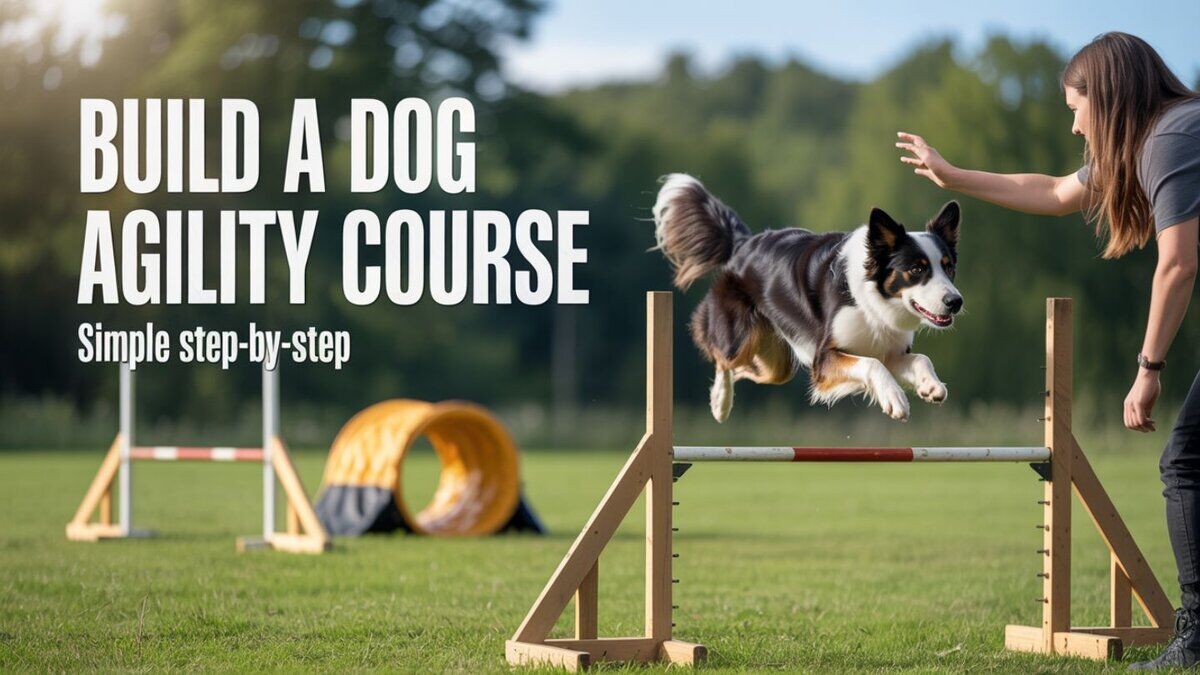
How to Build A Dog Agility Course
Building a dog agility course in your backyard is a fun and rewarding way to keep your dog active, healthy, and mentally engaged. This step-by-step blog will help you design and build a course tailored to your dog’s size, skill level, and energy. From assessing your yard space and choosing the right obstacles to ensuring safety and gradual progression, you’ll learn everything needed to create a training area that’s both effective and enjoyable.
Creating a backyard agility course goes hand in hand with proper training and structure. Exploring online dog training courses can be a great way to enhance your dog’s learning, improve obedience, and build confidence as they take on new challenges. With the right balance of consistency, motivation, and fun, you and your dog can enjoy the benefits of agility training together.
Key Takeaways
- Plan your dog agility course by assessing yard space and selecting safe obstacles suitable for your dog’s size and skills.
- Start small with simple obstacles, gradually increasing complexity based on your dog’s progress while prioritizing safety.
- Our One-on-One Training Sessions and Group Training Classes provide structured guidance and valuable socialization opportunities to help both you and your dog progress together.
Planning Your Dog Agility Course
Before starting, carefully plan your dog agility course by considering the following:
- The space you have available.
- The types of obstacles you wish to include.
- Using a smaller yard effectively with strategic obstacle placement.
- Choosing obstacles appropriate for your dog’s size, age, and fitness level to ensure safety.
- Creating a good layout to enhance training enjoyment and help your dog navigate the course efficiently.
Even smaller areas can host a successful dog agility course with the right setup. Lay out your course based on available space and desired obstacles, ensuring a logical flow and optimal use of space.
While planning, it helps to understand how professional trainers design structured lessons for canines. Learning about building a foundation for effective K9 training can guide you in creating routines that improve your dog’s focus, responsiveness, and motivation during agility sessions.
Assessing Yard Space
The first step in setting up your dog agility course is to assess your yard space. Ensure the area:
- Is flat
- Is grassy
- Is free from sharp objects that could injure your dog.
Remove any potential hazards like sticks, stones, or other debris to create a safe environment.
Measure the available space to ensure there is enough room for your dog’s size to move freely between obstacles and enough space for comfort. This spatial awareness will help you plan the layout effectively, ensuring your dog can navigate the course without running into obstacles.
Choosing Obstacles
Begin by choosing fundamental obstacles. Consider starting with jump bars, weave poles, and a teeter-totter. These are ideal for beginners and can be made from easily accessible materials. Consider your dog’s size, age, and fitness level to choose obstacles that are safe and appropriate.
As your dog gains confidence and skill, you can gradually introduce more complex obstacles to keep the training challenging and engaging.
Professional guidance can make a significant difference. While our online courses for K9 aren’t designed for specialty skill sets like agility, they are built to support law-enforcement K9 teams with foundational and operational training concepts. Working directly with a trainer through our One-on-One sessions or Group Training allows handlers to receive customized instruction, real-time feedback, and structured progression tailored to their specific deployment needs.
Building Basic Obstacles

Now that you’ve planned your course, it’s time to start building! You’ll need some basic tools and materials:
- Pull saw
- Drill/driver
- Various drill bits
- Combination square
- 1 1/2-inch pipes for constructing the obstacles
- 1-inch set screws
For visibility, paint the board with white primer and yellow paint mixed with an anti-skid additive. Safety and durability are essential when building your DIY dog agility course.
Start by listing some forbidden forms of the keyword “home agility course” according to Rule 5. Then, find out if there’s a chance to incorporate the keyword without making any extra assumptions, according to Rule 2. Keep it short.
Start with the fundamental obstacles like:
- Weave poles
- Jump bars
- A tire jump.
Using simple materials and straightforward instructions, you’ll quickly create a functional and enjoyable home agility course.
Here are the details for constructing each obstacle.
Constructing Weave Poles
Creating weave poles is straightforward. You can:
- Use garden stakes or dowel rods set 20–24 inches apart.
- Connect each 18 1/2-inch piece to the side of a tee.
- Use a block and hammer to tap the pipes tight.
For a colorful and fun look, use upright poles made from Pool noodles or even pool noodles. Secure one end into the ground, and you’re all set with a pole!
Making a Jump Bar
To make a jump bar, follow these steps:
- Use PVC pipes and flowerpots.
- Ensure the bar is lightweight and falls easily for safety.
- Use red tape to increase visibility.
- Adjust the height to 8 inches or 16 inches based on your dog’s ability.
Assemble the structure by connecting the pipes with tees and end caps, securing each connection with a block and hammer.
Those who wish to understand agility more deeply can benefit from exploring how long a dog handling course is. These courses help trainers and owners learn proper handling skills, timing, and body language, key components for effective communication and agility performance.
Creating a Tire Jump
For a tire jump, you can use a hula hoop, a bike tire, or any sturdy circular object. Ensure the tire or hoop is securely anchored and initially set low for safety. This will help your dog get used to jumping through the obstacle without any fear.
As your dog becomes more confident, you can gradually raise the height of the jump.
Adding Advanced Equipment
After mastering basic obstacles, introduce advanced agility equipment like a teeter-totter, tunnels, and an A-frame to diversify and enhance agility training. These obstacles develop your dog’s skills, boosting their confidence and agility.
Advanced obstacles improve physical abilities and make training sessions more enjoyable and stimulating. Your dog will love the new challenges, and you’ll enjoy their growth and improvement.
To take your training to the next level, consider studying advanced canine behavior and handler coordination. This approach strengthens your bond with your dog while refining control, speed, and precision throughout agility exercises.
Building a Teeter-Totter
A teeter-totter can be constructed using a wooden plank and a pivot point. A boogie board can serve as a half plank for smaller dogs on one side.
To create the base:
- Create two box-like sides using pipes and elbows.
- Connect the two sides with crosspieces.
- Assemble the base using PVC pipes and elbows.
- Ensure the plank used is 5 feet long.
- The plank should have dimensions of 12-by-8 inches.
Setting Up Tunnels
Setting up a tunnel can be easy and enjoyable. Consider the following tips:
- Use household items like furniture or repurpose children’s play tunnels.
- Ensure the ends are on a non-slip surface.
- Use temporary tunnels for flexibility in height and width adjustments, which is ideal for beginners.
Encourage your dog to pass through with high-value treats.
If you enjoy DIY training but want to deepen your knowledge, learning about why you should choose trainer courses can enhance your understanding of canine learning principles. These programs focus on effective communication, motivation, and reinforcement, all essential for agility success.
Assembling an A-Frame
An A-frame should be constructed from durable materials to ensure stability and a non-slip surface for safety. This obstacle is excellent for building your dog’s confidence as they climb up and down the frame.
Ensure the A-frame is sturdy and securely anchored to the ground to prevent any accidents.
Training Tips for Agility Success
Clear goals and plans are vital for successful agility training, helping maintain motivation and efficiency. Start with simpler obstacles to build a solid foundation before advancing to more complex ones. Keep an eye on your dog’s hydration during training, especially in hot weather.
Safety should always be a priority. Make sure the training area is free from hazards to prevent injuries. Choosing the right equipment that aligns with your dog’s physical conditions will also help prevent accidents.
Starting Small
Begin by focusing on one obstacle at a time. Using treats and positive reinforcement will encourage your dog to engage with your own dog agility course. Start small with a simple sequence and gradually introduce more obstacles to avoid overwhelming your dog.
Setting achievable goals will be helpful in building your dog’s confidence and extending training sessions as their skill improves.
Gradual Progression
Gradually increase the complexity of the course to match your dog’s growing skills. Start with basic obstacles and slowly introduce more challenging ones to improve their speed.
Recognize your dog’s increasing confidence and skills, and adjust the difficulty level of obstacles accordingly.
Safety First
Before starting an agility course:
- Consult your veterinarian to ensure your dog is fit and healthy.
- Use the 10/15 rule: after every 10 minutes of intense activity, give your dog a 15-minute rest and hydration break.
- Provide treats for energy during breaks.
- Prioritize safety during training.
- Ensure breaks if your dog appears unsure or stressed.
Regular health assessments can prevent injuries during training and competitions.
Joining Agility Competitions
Joining local agility competitions can be a fantastic way to enhance your dog’s skills and socialization. These events provide opportunities for training with other dog owners and learning from experts. Focus on having fun and enjoying the experience, as this will lead to better performance.
Participating in agility competitions not only improves your dog’s agility but also strengthens the bond between you and your best friend. The thrill of competing and the joy of seeing your dog excel is an experience like no other.
Finding Local Clubs
Join local agility clubs to enhance training for active dogs. These clubs provide expert coaching, resources, and opportunities to socialize with like-minded dog owners with furry friends.
Training in a club environment can greatly improve your dog’s agility skills and help you train effectively.
Competing Safely
Start by listing some forbidden forms of the keyword “secured” according to Rule 5. Assess your dog’s skills and fitness level to ensure they are ready for competitions. Ensure your yard is a flat surface, free from sharp objects, and secured to store.
Always prioritize safety by consulting your veterinarian, ensuring your dog is well-hydrated, and not overexerted.
Final Thoughts
Building a dog agility course in your backyard is a fun and rewarding way to keep your furry friend physically fit, mentally stimulated, and happy. From planning your layout and assessing yard space to choosing safe, engaging obstacles like weave poles, jump bars, and tunnels, this step-by-step blog covers everything you need to create a fun and safe course. Whether you’re just starting or advancing your dog’s agility training, this guide ensures a balance of safety, creativity, and progression for the best experience.
At Custom Canine Unlimited, we understand how important it is to create a clean and safe space for your pets to play and train. Alongside maintaining a tidy yard, we recommend exploring online dog training courses to complement your agility setup. These programs, such as law enforcement K9 training, military MWD training, and the advanced series K9 training, are designed by experts, the trusted leader in professional dog training. For pet owners looking to start early, their puppy class is an excellent foundation for agility and obedience.
Frequently Asked Questions
How much yard space do I need for a dog agility course?
You don’t need a big yard for a dog agility course; even a small area can work if you set up obstacles wisely. Just be creative with the space you have!
What basic obstacles should I start with?
You should definitely start with jump bars, weave poles, and a teeter-totter since they’re perfect for beginners and easy to put together. These basic obstacles will help build your skills and confidence!
How do I ensure my dog’s safety during training?
To keep your dog safe during training, make sure the area is clear of hazards and always have fresh water available. It’s also a good idea to check with your vet before starting any new training activities.
Where can I find local agility clubs?
Check out local agility clubs online or on social media to find training sessions and meet other dog lovers. Joining one can really boost your dog’s training and social skills!
Share this article

Written by : AJ Vargas
AJ Vargas is a highly skilled Canine Trainer at Custom Canine Unlimited, bringing extensive hands-on experience in law enforcement, working dogs, and specialized K9 operations. With a deep commitment to public safety and canine performance optimization, AJ has trained and deployed working dogs in high-stakes environments, supporting law enforcement agencies and security teams across the country. His expertise spans obedience, detection, patrol work, and real-world deployment readiness, ensuring both dogs and handlers achieve operational excellence. At Custom Canine Unlimited, AJ continues to advance canine training standards, helping shape top-tier K9 teams that deliver measurable results in the field.
Follow us
A quick overview of the topics covered in this article.

