

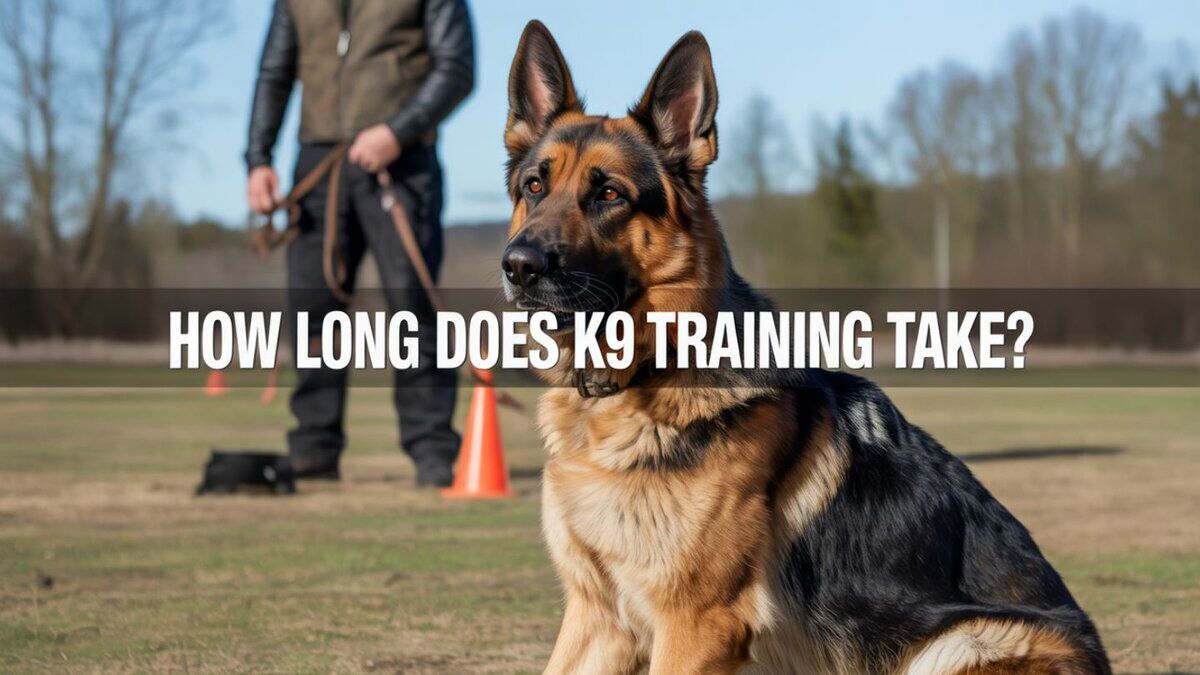
How Long Does It Take to Train a K9?
Training a working K9 is a complex, multi-phase process that extends far beyond basic obedience or short-term programs. Unlike pet training, K9 development requires precision, consistency, and long-term commitment from both the dog and the handler. Timelines vary widely depending on role, drive, genetics, and operational standards rather than a fixed number of weeks or months. Understanding what truly goes into preparing a deployable K9 helps set realistic expectations from the start. From early foundations to deployment readiness, K9 training is best viewed as a progressive career, not a finish line.
Key Takeaways
- Basic K9 training typically takes 4-6 months of intensive work, while developing a fully reliable working K9 team commonly requires 1-2 years or more of combined training and field experience
- Training is a lifelong process for working dogs – there’s no “finished” point, only deployment-ready milestones followed by ongoing 4 hours per week for K9 teams maintenance training
- Key factors affecting the timeline include the dog’s age, breed, drive, training environment complexity, and whether it’s a single-purpose or dual-purpose role
- Online training from Custom Canine Unlimited is limited to law enforcement courses and the Kennel Master Course for pet owners, which focuses on kennel care and maintenance rather than K9 team training
- Professional programs use minimal real-world distractions intentionally during training to prove the dog’s reliability under operational stress
What is the K9 Dog Training Duration?
When most people ask how long it takes to train a K9, they’re often surprised to learn there’s no simple answer. The truth is, basic working K9 skills typically require about 2-4 months of consistent, professional training, while developing a dependable operational K9 team can take 12-24 months, depending on the specific role and program intensity.
Let’s break down the realistic time ranges you can expect:
- Basic obedience and control foundation: 4-6 weeks of structured training
- Single-purpose detection or patrol foundation: 3-8 weeks of intensive skill development
- Dual or multi-purpose K9 team (6-8 weeks) – such as patrol combined with drug detection and tracking work, often 1-2 years before full deployment readiness
Here’s what makes K9 training different from regular dog training – law enforcement agencies typically require ongoing monthly maintenance training, often 16+ hours per month, plus periodic certification and re-certification throughout the dog’s working life. This isn’t a course you complete once and forget about.
Custom Canine Unlimited develops working K9 teams through intensive, in-person courses designed for law enforcement and security professionals. We don’t offer public “train your own police dog” online programs because hands-on, scenario-based work is essential for creating deployable teams.
The real answer to “how long” depends more on your desired end-use and training standard than any fixed calendar date. A drug detection dog has different requirements than a dual-purpose patrol and tracking dog, and each path has its own timeline.
When Can a Future K9 Start Training?
The path to becoming a working K9 usually starts in early puppyhood, long before formal patrol or detection work begins. This early foundation is crucial for developing the confidence and drive needed for police work later on.
Here’s how the typical progression unfolds:
6-8 weeks: Early evaluation and gentle handling begin. Trainers expose pups to different surfaces, sounds, and mild challenges through play. This isn’t serious training yet – it’s about building a foundation for future learning.
8-12 weeks: Introduction to basic manners, name recognition, and short “fun” training sessions. The puppy starts learning that humans are partners in exciting activities, not just providers of food and shelter.
3-6 months: Structured obedience training begins, along with environmental exposure and controlled play to build hunt and retrieve drives. The young dog learns to sit, stay, and come reliably in low-distraction environments.
12+ months: More serious discipline begins, including the foundations of patrol, tracking, or detection work, depending on the dog’s intended job and the agency’s needs.
Evaluators look for specific traits from birth: strong food and toy interest, quick recovery after sudden noises, willingness to explore new environments, and focused engagement with handlers. These early indicators help predict which dogs will excel in demanding working roles.
Early exposure to new odors, surfaces like gravel and metal grating, and sounds from traffic and equipment helps prevent future hesitation in operational settings. The key is making these experiences positive and confidence-building rather than overwhelming. Establishing a strong foundation early—through confidence building, engagement, and structured exposure—directly impacts how efficiently advanced K9 training can develop later.
Remember, consistency matters more than intensity at this age. Short, frequent sessions with clear rules and positive reinforcement work better than long, exhausting drills that can burn out a young pup.
Key Factors That Influence K9 Training Duration
No two working dogs progress at the same speed, but several predictable factors determine how quickly a dog reaches deployment readiness. Understanding these variables helps set realistic expectations for your K9 program.
Age and Maturity
Young adults around 12-24 months often learn complex skills faster than very young puppies or older dogs. They have the physical coordination for demanding tasks while still being mentally flexible. Older green dogs may come with established habits that require extra time to reshape, potentially extending the training timeline.
Breed and Genetics
Certain dog breeds consistently excel in working roles. German Shepherds bring versatility, power, and high trainability – perfect for patrol, tracking, drug detection, and general service roles. Belgian Malinois offer intense work drive and agility that can actually shorten learning time, though they demand experienced handlers. Dutch Shepherds provide similar working traits, while Labrador Retrievers excel in detection roles with their strong hunt drive and stable temperament.
Breeding for nerve strength, drive, and health significantly shortens the time to dependable performance. Dogs from proven working lines typically progress faster than those selected primarily for appearance.
Drive and Temperament
Strong play, hunt, and work drive generally accelerate learning across all phases. A dog that’s absolutely focused on toys, food, or praise will engage more consistently during training sessions. Dogs that are overly soft or easily distracted may need longer to build the confidence and focus required for reliable police work. Different agencies rely on varied K9 training methods depending on operational goals, dog temperament, and role specialization, which can significantly influence how quickly a team progresses through each training phase.
Handler Skill and Consistency
A well-designed professional program can compress months of trial-and-error into a faster, more reliable path. Handler education is just as important as the dog’s training – a skilled handler can maintain and advance the dog’s capabilities throughout its career, while an inconsistent approach can undo weeks of progress.
Training Environment
The training environment plays a crucial role in how quickly skills transfer to real deployments. We intentionally include minimal, controlled distractions in our training environments because working with some realistic challenges proves the dog understands its job under actual conditions, not just in a quiet field.
Training environments should progress from simple, low-distraction repetitions when teaching new skills to more complex locations like warehouses, parking lots, and wooded areas as competency builds.
Role Complexity

Single-purpose dogs (focusing solely on drug detection or tracking) generally require less total time than dual-purpose teams that must master patrol work plus detection. A dog trained for patrol and drug detection needs to seamlessly switch between controlled aggression for suspect apprehension and careful, methodical searching for contraband – two very different mindsets that take time to perfect.
Typical K9 Training Timeline: From Basics to Deployment
This roadmap represents common industry practices, though exact timelines vary based on the individual dog, handler experience, and agency standards. Think of this as a framework rather than a rigid schedule. From early bonding to deployment readiness, police K9 training follows a structured progression that balances obedience, operational skills, legal standards, and ongoing evaluation.
0-3 Months With the Dog
The initial bonding period focuses on establishing trust and basic communication. During this phase, handlers work on name recognition, simple house rules if the dog lives with the officer, and fundamental commands like sit, down, and recall. Short daily sessions build toy or food motivation while strengthening the dog’s engagement with its handler.
This isn’t intense training yet – it’s relationship building that creates the foundation for everything that follows.
3-6 Months With the Dog
Obedience training expands to include reliable leash walking, extended stays, and recall under minimal distractions. The dog learns to work around patrol cars, different uniforms, slick floors, stairs, and various training facilities.
Environmental exposure becomes systematic rather than incidental. The dog needs to be comfortable performing basic commands in the back of a police vehicle, on courthouse steps, and in busy parking lots where it might later be deployed.
4-6 Months of Focused Working-Skill Training
This intensive phase adds task-specific skills like building searches, tracking, detection of target odors, or controlled bite work, depending on the program requirements. The dog practices these skills repeatedly in different locations to ensure performance generalizes beyond a single training facility.
For drug detection dogs, this means learning to methodically search vehicles, luggage, rooms, and outdoor areas while maintaining focus and providing clear indications. Patrol dogs develop controlled aggression, precise bite work, and reliable release commands under high-stress scenarios.
6-12+ Months of Team Development
The dog and handler now function as a true K9 team, focusing on communication, reading body language, and integrating commands into realistic scenarios. Training includes vehicle searches, area searches, building entries, and tracking exercises with minimal but realistic distractions.
Scenario-based drills become the norm – practicing actual deployment situations rather than isolated skill repetition. This phase develops the split-second decision-making and seamless communication that separates adequate teams from exceptional ones.
Deployment and Ongoing Training
Many agencies consider a team ready for deployment once they meet defined performance standards and pass required certification. However, this isn’t the end – it’s really just the beginning of operational learning.
Continuing education through regular training days, problem-solving sessions, and periodic recertification keeps skills sharp and ensures compliance with agency policy. Most departments require documented maintenance training to keep teams operationally ready.
What Makes a Strong Working K9?
Good K9 candidates are identified and selected long before formal police or security training begins. The selection process focuses on observable behaviors, health markers, and working potential that predict future success.
Core Qualities for Working Dogs
High work and play drive stands out as the most important trait. The best working dogs show eagerness to chase toys, search systematically, and engage in tasks for extended periods without losing enthusiasm. This drive sustains them through long training sessions and demanding deployments.
Balanced nerves mean the dog recovers quickly after sudden noises or environmental stress without shutting down or showing excessive avoidance. Working dogs encounter everything from gunfire to explosions during their careers – they need the mental resilience to process stress and keep working.
Strong focus and trainability show up as a willingness to interact with handlers and repeat tasks without constant correction. The dog should actively engage in learning rather than simply tolerating it.
Physical soundness and endurance ensure the dog can handle long searches, extended tracking, or demanding patrol work without breaking down. This includes joint health, cardiovascular fitness, and overall structural integrity.
Temperament Balance
“Friendly but focused” often describes the ideal working dog temperament. These dogs can be safely controlled in public settings around civilians, yet commit fully to their job when deployed. They’re social enough to work around other officers and community members but possess the drive to pursue suspects or contraband with intensity.
The trainers only train dogs for specific working tasks, depending on the dog’s ability to pass an evaluation.
Custom Canine Unlimited evaluates working dogs for suitability in roles like patrol, tracking, detection of target odors, and other specialized tasks based on these predictable characteristics rather than hoping temperament issues will resolve with training.
Which Breeds Commonly Excel as K9s?
While many dog breeds can learn basic tasks, only some consistently meet the physical and mental demands of modern working K9 teams. Decades of operational experience have identified breeds that reliably produce capable working dogs. Breed selection plays a major role in long-term success, as certain working-line dogs consistently demonstrate the physical structure, nerve strength, and drive required for police K9 duties.
German Shepherd Dog
German Shepherds remain versatile, powerful, and highly trainable, making them suitable for patrol work, tracking, drug detection, and general service roles. Their combination of strength, intelligence, and biddability has made them a long-time staple in law enforcement and security work.
These dogs typically learn new skills methodically and retain training well. They’re large enough for patrol work but controllable enough for detection tasks requiring finesse and precision.
Belgian Malinois
Belgian Malinois bring speed, agility, and intense work drive that make them popular choices for patrol, detection, and specialized tactical teams. Their high energy level can actually shorten learning time since they engage so intensely with training activities.
However, their drive demands experienced handlers and structured programs. A Malinois that doesn’t receive adequate mental and physical exercise can become destructive or difficult to manage.
Dutch Shepherd
Dutch Shepherds offer similar working traits to Malinois and German Shepherds, commonly used in both patrol and detection roles. They tend to be slightly less intense than Malinois while maintaining strong work drive and trainability.
Labrador Retriever
Labrador Retrievers excel in detection roles thanks to their strong hunt drive, stable temperament, and methodical working style. Their friendly demeanor makes them particularly suitable for drug detection in schools, airports, and other public spaces where a less intimidating appearance is beneficial.
Labs typically show excellent focus during search work and maintain enthusiasm for extended periods, making them ideal for roles requiring systematic, thorough searches.
Selection Matters More Than Breed
Proper health screening, temperament evaluation, and professional training matter more than breed labels alone when estimating training timelines. A well-bred working-line dog from any of these breeds will typically progress faster than a poorly selected animal, regardless of pedigree.
Training Environments: Why Controlled Distractions Matter
The training environment strongly affects how quickly a dog’s skills transfer from practice scenarios to real-world deployments. The goal isn’t to eliminate all distractions – it’s to create controlled conditions that build reliability under operational stress.
Ideal Training Setup
Effective K9 training facilities include safe fields, buildings, and vehicles designed for realistic scenarios. Most importantly, they incorporate minimal but intentional distractions such as distant movement, background noises, or other teams working nearby.
These controlled distractions serve a crucial purpose: they prove the dog understands its job under conditions that mirror actual deployments rather than perfect quiet conditions that don’t exist in the field.
Why Zero-Distraction Isn’t the Goal
Real police work always involves unpredictable elements – moving people, vehicle traffic, competing odors from food or other sources, and varying noise levels. A dog trained only in sterile environments may struggle when deployed in busy locations like airports, schools, or traffic stops.
Practicing with manageable distractions during training creates confidence and reliability that transfers to operational settings. The dog learns to maintain focus on its job despite environmental variations.
Progressive Complexity
Training begins with simple, low-distraction repetitions when teaching new skills. As the dog demonstrates competency, trainers gradually introduce more complex locations like warehouses with equipment noise, parking lots with vehicle movement, and wooded areas with natural wildlife odors.
This progression ensures the dog generalizes its training across different environments rather than becoming dependent on specific locations or conditions.
Custom Canine Unlimited uses challenging but controlled environments to help K9 teams meet operational standards faster and more reliably. Our approach builds confidence through success while preparing teams for the realities of police work.
Handler and Team Training: How Long Does It Take the Human to Learn?
Dog training represents only half the equation in developing effective K9 teams. The handler must develop specific skills that enable them to work successfully with their canine partner throughout the dog’s career.
Handler Learning Components
Reading canine behavior and body language forms the foundation of successful teamwork. Handlers learn to recognize subtle changes in their dog’s alertness, stress levels, and indication behaviors that might be invisible to untrained observers. This skill development takes months of daily interaction and guided practice.
Proper equipment use includes understanding leads, collars, muzzles, and protective equipment. Handlers must be able to deploy, adjust, and remove equipment quickly and safely under various conditions, including high-stress situations.
Deployment tactics and search patterns require handlers to understand when and how to deploy their dogs effectively. This includes legal considerations, safety protocols, and tactical approaches that maximize the team’s effectiveness while minimizing risks.
Documentation and recordkeeping ensure teams meet agency standards and legal requirements. Handlers must learn to document training hours, deployments, certifications, and any incidents involving their dogs.
Professional Handler Courses
Many agencies enroll handlers in multi-week or multi-month intensive courses where they train daily with their assigned dogs. This immersive approach accelerates team development by providing consistent, professional instruction and immediate feedback on technique.
These courses typically combine classroom instruction on legal issues, canine psychology, and tactical considerations with hands-on scenario training. The combination ensures handlers understand both the theory and practical application of K9 deployment.
Online vs. In-Person Training
Custom Canine Unlimited’s online offerings for the general public are limited to the Kennel Master Course, which focuses on kennel care, cleaning, and maintenance rather than K9 deployment tactics. This course helps working dog owners understand proper facility management, but doesn’t replace professional team training.
Law enforcement personnel may access agency-approved online training to supplement their in-person K9 courses, but these are specialized continuing education modules rather than pet-owner obedience classes. The hands-on nature of K9 work requires direct, scenario-based practice that can’t be replicated through online instruction alone.
Custom Canine Unlimited Training Options and What They Mean for Timelines
Program structure significantly affects how quickly dogs reach operational readiness. Understanding different training approaches helps agencies and handlers choose the most effective path for their specific needs and timeline requirements.
In-Person K9 Programs
Working dogs for law enforcement and security receive training through intensive in-person courses featuring daily professional instruction and scenario-based practice. These programs compress many months of part-time practice into shorter calendar windows through concentrated, focused training.
The advantage of professional programs lies in their systematic approach and experienced instruction. Dogs receive consistent, expert guidance rather than sporadic training sessions that may inadvertently reinforce incorrect behaviors or create gaps in skill development.
Law Enforcement Online Courses
Custom Canine Unlimited offers select online courses specifically designed for law enforcement training – these aren’t public pet-owner programs. These courses may cover legal updates, advanced deployment considerations, or specialized concepts that support K9 handlers’ continuing education requirements.
These online options supplement rather than replace hands-on training. They’re valuable for understanding policy changes, reviewing tactics, or preparing for certification exams, but they don’t substitute for scenario-based practice with live dogs.
Kennel Master – LE, Military, Veterans | Kennel Manager – Civilian
The Kennel Master Course represents our only online offering available to the general public. This program focuses specifically on kennel operations, daily care routines, cleaning protocols, sanitation procedures, and facility maintenance rather than patrol or detection training.
Understanding proper kennel management helps working dog owners support their animals’ long-term health and readiness, but it doesn’t replace professional K9 team training. Think of it as essential support knowledge rather than operational skill development.
Realistic Expectations
No program can guarantee specific behavioral outcomes or provide full warranties on performance. Training timelines remain estimates guided by individual dog progress, handler consistency, and environmental factors beyond any trainer’s control.
The most reliable indicator of success isn’t a warranty or guarantee – it’s the quality of ongoing training and handler commitment after initial certification. Strong teams are built through consistent work over months and years, not just initial course completion.
Is K9 Training Ever “Finished”?
Working dog training represents a career-long process rather than a one-time course with a permanent endpoint. Understanding this ongoing commitment helps agencies and handlers maintain effective teams throughout their dogs’ working lives.
Maintenance Training Requirements
Law enforcement agencies typically mandate scheduled training sessions – often weekly or monthly – plus dedicated problem-solving sessions when specific issues arise. Many departments require at least 16 hours of documented training per month to keep teams certified and deployment-ready.
This ongoing training isn’t just a bureaucratic requirement – it’s an operational necessity. Dogs must periodically demonstrate proficiency in their primary tasks to remain certified and meet agency or organizational standards. Skills that aren’t practiced regularly tend to deteriorate, potentially creating safety risks during actual deployments.
Evolving Skills and Experience
Working dogs continue developing throughout their careers as new deployment experiences reveal areas for refinement. A drug detection dog might encounter new concealment methods or unusual odor sources that require additional training to maintain effectiveness.
Handlers also continue adjusting their tactics and communication as they gain experience reading their specific dog’s behavior patterns. Each team develops unique signals and rhythms that improve over months and years of working together.
Retirement and Career Completion
Most working dogs retire after approximately 6–8 years of service, depending on their age at the time they entered an agency and the demands of their assignment. Retirement is not the result of failure or diminished value, but a planned and respected phase of a K9’s working life.
Responsible K9 programs recognize retirement as part of long-term team management. As dogs age, agencies focus on maintaining health, soundness, and quality of life rather than extending service beyond what is safe or humane. Regular veterinary evaluations and performance assessments help determine the appropriate time for a dog to transition out of active duty.
The strongest K9 teams are built by acknowledging that a dog’s working career is finite. Graduation from initial training marks the beginning of service, while retirement represents the successful completion of that service, often followed by continued companionship with the handler or placement in a suitable home.
The Reality Behind K9 Training Timelines
Developing a reliable K9 is not about reaching a single endpoint—it’s about building a capable, confident team through structured progression and ongoing reinforcement. While foundational skills may emerge within the first several months, true operational readiness often takes a year or more of consistent work, followed by continuous maintenance training. Factors such as role complexity, handler experience, and training environments all influence how quickly milestones are reached. The most successful K9 teams recognize that training evolves throughout the dog’s working life, adapting to new challenges, environments, and operational demands rather than stopping once certification is achieved.
At Custom Canine Unlimited, we approach K9 development with a long-term, performance-driven mindset rooted in real-world application. Through professional in-person instruction, advanced law enforcement programs, and specialized educational resources, we support teams at every stage of their progression. Whether your focus is k9 training in Gainesville, expanding operational knowledge through online K9 courses, law enforcement K9 training, professional dog training, or advanced series K9 training, we’re here to help you build dependable teams that perform under pressure. Take the next step with us and invest in training that’s designed for real deployments—not shortcuts.
Frequently Asked Questions
Can a family dog be turned into a fully operational K9?
While some pet dogs possess the drive and temperament for specialized work, most operational K9s are selected and raised specifically for working roles from early puppyhood. Converting a typical family dog into a dependable patrol or detection dog is uncommon and usually takes significantly longer than training a purpose-bred candidate. Family dogs often lack the specific drives, conditioning required for demanding police work, making professional selection processes more reliable for agencies needing deployable teams.
Is there a way to speed up K9 training safely?
Professional programs, consistent daily practice, and structured training plans can reduce wasted time and avoid common mistakes, but rushing developmental milestones or skipping foundational obedience often creates setbacks later in training. While all dogs must meet required standards by the end of the course, training methods and delivery are adjusted to fit the individual dog to ensure successful skill acquisition and certification- attempting to force faster progress typically results in stress, confusion, or unreliable performance that requires additional time to correct. Quality training progresses systematically through proven developmental stages rather than racing toward arbitrary deadlines.
How many hours per week should a handler train with a working K9?
New teams should expect daily training sessions, often totaling 10-20 hours per week between formal instruction and informal practice, plus regular scenario-based training days with other teams. After deployment, agencies commonly require at least 16 hours of monthly documented training, though progressive departments often exceed this minimum. The most effective approach emphasizes consistent, quality training sessions rather than simply accumulating hours without purpose or structure.
Does online training replace in-person K9 courses?
Online law enforcement courses and kennel management training support knowledge development, but cannot replace the hands-on, scenario-based work required to produce deployable working K9 teams. Working dogs must practice real searches, controlled aggression, and environmental adaptation under professional supervision with immediate feedback and correction. While online resources provide valuable supplemental education, the physical and behavioral aspects of K9 training require direct interaction between dogs, handlers, and experienced instructors.
At what age do most working K9s retire?
Working dogs typically retire around 9-12 years old, depending on their health, workload intensity, and specific agency policies, though some dogs remain effective longer, while others may need earlier retirement due to injuries or declining performance. As dogs approach retirement age, training naturally shifts from expanding new capabilities to maintaining safe, reliable performance in their established roles. Many retired working dogs transition successfully to family life with their handlers, having earned a comfortable retirement after years of dedicated service.
Share this article

Written by : AJ Vargas
AJ Vargas is a highly skilled Canine Trainer at Custom Canine Unlimited, bringing extensive hands-on experience in law enforcement, working dogs, and specialized K9 operations. With a deep commitment to public safety and canine performance optimization, AJ has trained and deployed working dogs in high-stakes environments, supporting law enforcement agencies and security teams across the country. His expertise spans obedience, detection, patrol work, and real-world deployment readiness, ensuring both dogs and handlers achieve operational excellence. At Custom Canine Unlimited, AJ continues to advance canine training standards, helping shape top-tier K9 teams that deliver measurable results in the field.
Follow us
A quick overview of the topics covered in this article.

