

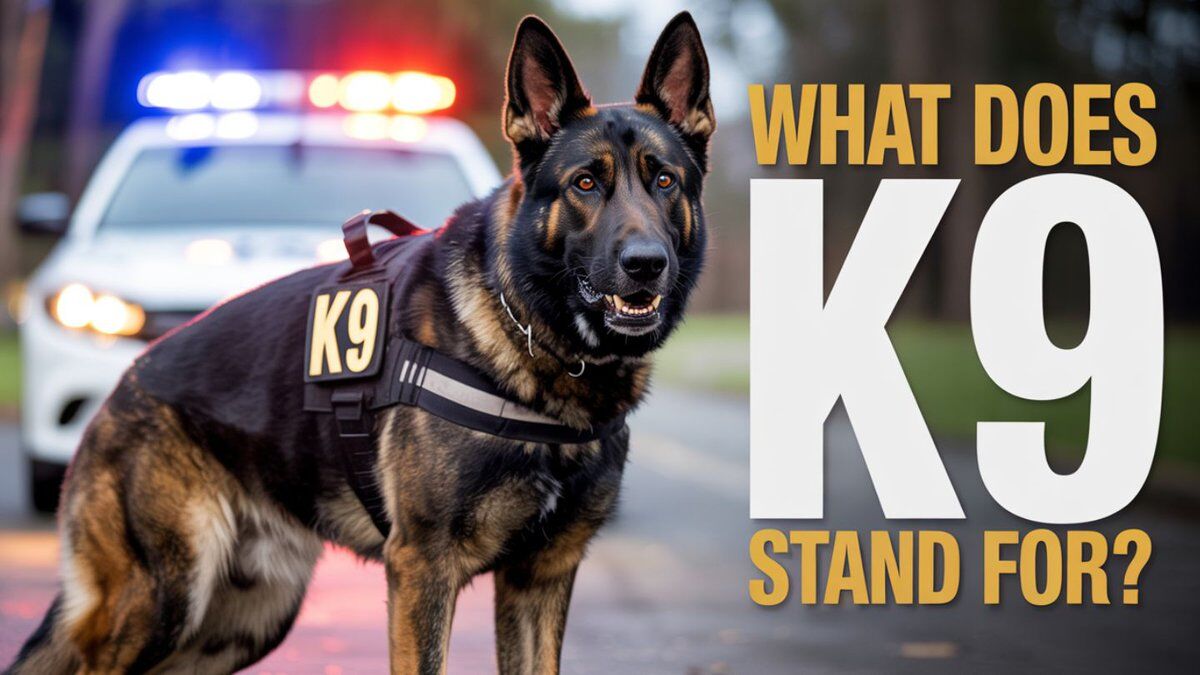
What Does K9 Stand For?
Dogs have long been indispensable partners to humans, excelling in roles that demand intelligence, discipline, and loyalty. Among their most specialized duties is supporting law enforcement and military operations, where their sharp senses and agility become critical assets. Over decades, selective breeding and rigorous training have produced highly skilled working dogs capable of detecting drugs, tracking criminals, and performing search-and-rescue missions. Their value lies not just in physical abilities but also in their instinct to protect and serve alongside handlers. In this blog, we’ll explore their origins, the training that shapes them, and the diverse roles they fulfill.
Key Takeaways
- The term ‘K9’ originates from the phonetic similarity to the word ‘canine’ and is used in law enforcement to denote specifically trained police dogs.
- K9 units are classified into single-purpose and dual-purpose dogs, trained for either specific tasks or multiple roles in law enforcement.
- K9 police dogs perform crucial roles such as suspect apprehension, detection duties, and search and rescue, significantly enhancing the effectiveness of law enforcement operations.
Origin of the Term “K9”
The abbreviation “K9” might seem like a modern term, but its roots are deeply embedded in linguistic history. Derived from the phonetic similarity to the English and French word “canine,” both in English and French, the French word canine “K9) simply means dog. This clever play on words highlights the connection between these working dogs and their more domesticated counterparts. Over time, “K9” has become standardized in law enforcement circles to specifically refer to police dogs.
This term’s adoption underscores the specialized training and roles these dogs undertake. Unlike your average family pet, a K9 is a dog specifically trained for tasks that require precision, discipline, and an acute sense of smell. Their specialized training in critical law enforcement duties makes “K9” synonymous with highly skilled working dogs and reflects the importance of dog knowledge in their development.
Historical Background of Police Dogs
The history of police dogs stretches back to the Middle Ages, when dogs were informally employed to track criminals. Bloodhounds were among the first breeds used due to their exceptional tracking abilities. However, it wasn’t until the late 19th century that formal dog training programs began to emerge, marking the start of a more structured approach to using dogs in law enforcement. This structured approach reflects why many agencies emphasize the use of K9S as an essential component of crime prevention and investigation.
One of the earliest organized training programs for police dogs started in Ghent, Belgium, driven by a shortage of officers. This initiative laid the groundwork for modern K9 units. By the 1950s, K9 units had gained significant recognition, especially after the Baltimore police department’s program showcased their effectiveness in various law enforcement tasks. Today, these dogs are indispensable, performing duties that range from patrol to detection, thereby enhancing the capabilities of police officers.
The National Police Dog Foundation has played a pivotal role in supporting the development and sustainability of K9 units across the United States. Their efforts ensure that these dogs receive the best training possible, maintaining high standards in law enforcement.
Popular Breeds Used in Law Enforcement

When it comes to law enforcement, not all dogs are created equal. Certain breeds stand out for their intelligence, strength, and adaptability. German Shepherds, for instance, have long been favored as the ideal police dog since they were determined to be the best fit in 1920. Their versatility and keen sense of smell make them excellent for both patrol and detection duties. Breed selection is often based on professional evaluations, such as those highlighted in best dog breeds for police K9 training, which detail why specific breeds excel in law enforcement work.
Belgian Malinois are another breed that is highly regarded in police work. Known for their agility and high energy levels, these dogs are often used in high-intensity situations. Other breeds commonly employed in various roles include:
- American Pit Bull Terriers
- Bloodhounds
- Beagles
- Labrador Retrievers
These breeds are used for tasks ranging from narcotics detection to search and rescue. Each breed brings unique strengths to the table, making them invaluable assets in different aspects of law enforcement. They often undergo rigorous programs to train for these specialized roles.
The National Police Dog Foundation ensures that these dogs receive comprehensive training tailored to their specific roles. Whether it’s the Belgian Malinois’s agility in patrol duties or the Bloodhounds’ extraordinary tracking abilities, these dogs are meticulously selected and trained to perform their duties with precision and reliability.
Types of K-9 Units
K-9 units are categorized into two main types: single-purpose dogs and dual-purpose dogs. This classification primarily depends on whether the dogs are trained for a single task or multiple responsibilities.
Understanding these common classifications helps in appreciating the specialized training and roles that each type of K-9 unit performs.
Single Purpose Dogs
Single-purpose dogs are trained to excel in one specific task, such as narcotics detection, tracking, or cadaver detection. These dogs undergo intensive training focused on their particular area of expertise. For example, a dog trained for narcotics detection will spend countless hours being exposed to various drug scents to ensure accuracy in real-world scenarios.
Breeds such as Labrador Retrievers and Golden Retrievers are often chosen for single-purpose roles due to their keen sense of smell and friendly demeanor. These dogs are not just tools for law enforcement; they are partners who work closely with their handlers to achieve specific objectives, making them indispensable in their specialized fields.
Dual Purpose Dogs
Dual-purpose dogs are the Swiss Army knives of the K-9 world. These dogs are trained to perform either patrol duties or detection duties, making them incredibly versatile. Their training regimens are comprehensive, covering a wide range of scenarios to prepare them for the multifaceted roles they will play in the field.
Breeds like German Shepherds and Belgian Malinois are most commonly used breeds as dual-purpose dogs due to their intelligence and adaptability. These dogs can seamlessly transition from detecting narcotics to apprehending suspects, showcasing their remarkable versatility and value in law enforcement operations.
K-9 Training Programs
Training a police dog is no small feat. It requires a combination of basic obedience training and specialized training for specific tasks. Typically, police dogs undergo basic obedience training that lasts between eight months and a year. This initial training lays the foundation for more advanced tasks such as narcotics detection, explosives detection, and tracking. Specialized programs like K9 police dog training ensure that both dogs and handlers meet the rigorous standards necessary for high-stakes law enforcement duties.
Handlers are fundamental to this process. Before joining a K-9 unit, handlers must complete police academy training and possess 1-2 years of patrol experience. This ensures they have the necessary skills and experience to work effectively with their K-9 and human partners. The bond between a handler and their dog is essential for successful operations, built on trust and mutual understanding.
The National Police Dog Foundation supports these rigorous training programs, ensuring that both handlers and dogs are prepared for the demanding tasks they will face. Training programs are designed to meet the highest standards of law enforcement, whether for single-purpose dogs focusing on specific scents or dual-purpose dogs handling multiple roles.
Roles and Responsibilities of K-9 Police Dogs
K-9 police dogs perform a variety of roles that are crucial to law enforcement. These roles can be broadly categorized into:
- Suspect apprehension
- Detection duties
- Search and rescue
Each task requires deep handler-canine collaboration, which is thoroughly detailed in everything you need to know about police K9 training to ensure operational excellence in the field.
Suspect Apprehension
One of the most high-profile roles of K-9 units is suspect apprehension. These dogs are trained to locate and subdue suspects, often deterring crime simply by their presence. Studies have shown that K-9 teams have a much higher success rate in locating suspects compared to human officers, achieving a 93% accuracy rate in searches.
Doberman Pinschers, for example, are trained to apprehend suspects without causing harm, showcasing both strength and discipline. The presence of these trained dogs can often lead to suspects surrendering without the need for force, highlighting their role as a powerful deterrent in law enforcement.
Detection Duties
Detection duties are another critical function of K-9 units. These dogs possess a heightened sense of smell, approximately 10,000 times more sensitive than humans, making them exceptionally effective at identifying narcotics, explosives, and other critical crime scene evidence. Bloodhounds, for instance, are renowned for their exceptional tracking ability, and their scent evidence is even admissible in some legal cases. The duty of these units is vital in maintaining public safety.
Beagles, with their compact size and keen sense of smell, excel at finding drugs and food in customs. Whether it’s a single-purpose K-9 focused on a specific task or a dual-purpose dog handling multiple duties, their detection capabilities are invaluable to law enforcement.
Search and Rescue
In search and rescue missions, K-9 units play a vital role in locating individuals who are lost or missing by following scent trails. These dogs use their keen sense of smell to track scents over various terrains, making them incredibly efficient in finding missing persons.
Breeds such as Dutch Shepherds and Bouvier des Flandres are particularly effective in search and rescue operations due to their intelligence and versatility. The presence of K-9 units in search and rescue missions enhances the effectiveness of these operations, ensuring that lost individuals are located swiftly and safely.
Ethical Considerations and Legal Challenges
The use of police dogs comes with ethical and legal challenges that cannot be overlooked. Victims of police dog shootings often have legal avenues, such as civil rights lawsuits claiming unreasonable seizures. However, the journey to justice can be fraught with difficulties, including limited legal representation and public skepticism. Developing strong operational guidelines, such as types of K9 training methods, helps balance effective enforcement with ethical standards.
Additionally, the emotional impact on pet owners from police dog shootings can be profound, causing community outrage and eroding public trust in law enforcement amid growing lawlessness. Critics argue that non-lethal methods should be prioritized over lethal force against animals by law enforcement.
Transparency in investigations and adherence to legal standards are crucial for maintaining public trust and ensuring ethical practices to protect the security of police dogs.
Benefits of K-9 Units in Modern Policing
K-9 units bring numerous benefits to modern policing. One of the most significant advantages is the enhanced safety they provide to law enforcement officers. K-9 units enable officers to maintain a safe distance from potential threats, providing valuable time to prepare and de-escalate situations. The strength of these benefits rests on early-stage conditioning similar to building a foundation for effective K9 training, ensuring consistent performance and reliability. This reduces the risk faced by officers in dangerous situations and increases the overall personal protection of law enforcement operations.
Additionally, K-9 units are instrumental in various law enforcement tasks, such as detecting illegal substances and assisting in investigations. Labrador Retrievers, for example, are favored for their friendly demeanor, which helps reduce public anxiety during patrols. These dogs operate under strict checks and balances, including regular testing and certifications, to ensure they meet high operational standards.
The Lasting Significance of K9 Units
K9 units embody the remarkable partnership between humans and dogs, showcasing unmatched skill, discipline, and loyalty. From detecting explosives to tracking suspects and assisting in search and rescue, their contribution to law enforcement and public safety is irreplaceable. These specially trained dogs not only enhance operational efficiency but also strengthen the bond between communities and protective services, proving that their role is as vital today as ever.
At Custom Canine Unlimited, we are dedicated to shaping exceptional working dogs through specialized K9 training in Gainesville. Our team focuses on advanced obedience, detection, and service training programs designed to meet the needs of law enforcement, military, and personal protection. Partner with us to experience world-class training that equips both handlers and dogs for excellence in every mission.
Frequently Asked Questions
What is the full meaning of K9?
The full meaning of K9 is “canine,” referring specifically to dogs trained to assist law enforcement. These dogs have historically played a crucial role in police work since the Middle Ages.
What does “K9” stand for?
“K9” stands for “canine,” referring specifically to dogs trained for law enforcement purposes. This term is commonly used in both English and French contexts.
What are the primary roles of police dogs?
The primary roles of police dogs include suspect apprehension, detection of narcotics and explosives, and conducting search and rescue missions. Their diverse capabilities make them invaluable assets in law enforcement.
What breeds are most commonly used in K9 units?
The breeds most commonly utilized in K9 units are German Shepherds, Belgian Malinois, Labrador Retrievers, and Bloodhounds, selected for their unique strengths and capabilities.
How are K9 units trained?
K9 units are trained through structured programs that encompass basic obedience and specialized skills, such as narcotics and explosives detection, as well as tracking. Handlers are equally trained to collaborate effectively with their canine partners.
Share this article

Written by : AJ Vargas
AJ Vargas is a highly skilled Canine Trainer at Custom Canine Unlimited, bringing extensive hands-on experience in law enforcement, working dogs, and specialized K9 operations. With a deep commitment to public safety and canine performance optimization, AJ has trained and deployed working dogs in high-stakes environments, supporting law enforcement agencies and security teams across the country. His expertise spans obedience, detection, patrol work, and real-world deployment readiness, ensuring both dogs and handlers achieve operational excellence. At Custom Canine Unlimited, AJ continues to advance canine training standards, helping shape top-tier K9 teams that deliver measurable results in the field.
Follow us
A quick overview of the topics covered in this article.


